
Article
Fax Won’t Go Away. AI Saved It.
Feb 11, 2026
For years, fax in healthcare has been treated as a joke.
Why are we still using fax?
Is this the Stone Age?
Why don’t medical practices just connect their systems together?
But this framing overlooks something important. Fax did not survive by accident.
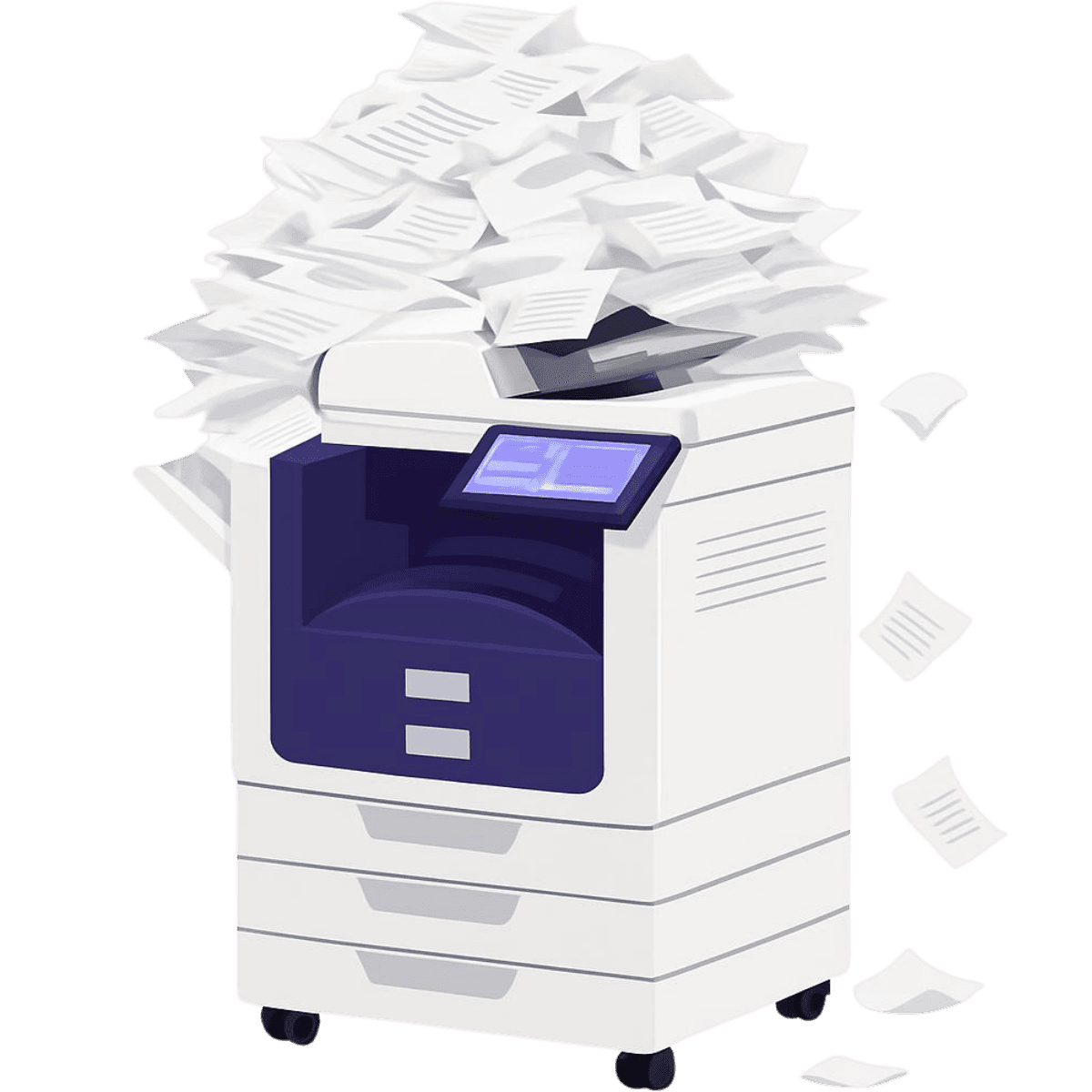
Fax as Healthcare’s Simplest Universal Interface
Despite its outdated reputation, fax became one of the most successful interoperability mechanisms in healthcare because it functions as a universal, low-friction interface for information exchange.
Healthcare organizations vary enormously. A small private practice, a specialty clinic, and a large hospital system may all use different software, different workflows, and very different budgets. Yet all of them can easily exchange information through fax.
A practice can export or print a patient chart, scan or digitally attach documents, and send them to a verified destination number. No vendor coordination is required. No field mapping is needed. No lengthy integration projects stand in the way.
Information moves.
This simplicity is not a minor detail. Healthcare is not organized around identical technology stacks. It is organized around doctors and patients. Patients choose clinicians, not software platforms. Wherever a patient goes, information must follow.
Fax solved this coordination challenge long before modern APIs became practical across a fragmented national ecosystem.
Modern Fax Is Not Just Paper
When people think about fax, they often imagine analog machines and physical paper. In reality, most healthcare fax traffic now flows through electronic infrastructure.
Every practice understands it. Every practice supports it.
Fax remains one of the few truly universal communication layers in healthcare.
The Real Problem Was Never Fax
If fax works so well for information exchange, why has it generated so much frustration?
Because receiving a fax traditionally triggers expensive manual work.
When a document arrives, staff has to open it, read it, interpret its meaning, identify the patient, extract key details, upload the file, re-enter data into the EHR, and route the information to the appropriate person.
Every document requires human attention. Even efficient practices face backlogs, delays, interruptions, and rising administrative costs. Fax itself is fast, but processing the information is slow.
This is where the true inefficiency lives.
Carethink Changes the Equation Completely
Carethink’s AI Platform fundamentally alters this dynamic. Documents are no longer opaque images requiring full human interpretation.
We can now read entire documents, extract structured fields, understand context, classify document types, detect urgency, populate EHR records, and attach source documents correctly. Tasks that previously required hours can now occur in seconds.
Crucially, the transport mechanism does not need to change. Fax can remain the input channel while AI becomes the interpretation and processing layer.
There is no need for complex field-to-field integrations between every pair of systems across the country.
Document-Based Work Is Not Going Away
Healthcare remains deeply document-driven for good reasons. Clinical documentation carries narrative context, legal clarity, compliance value, and human-friendly visual structure.
Clinicians think in documents. Regulators rely on documents. Audits depend on documents.
The goal is not to eliminate documents. The goal is to eliminate the manual friction surrounding them.
For years, fax in healthcare has been treated as a joke.
Why are we still using fax?
Is this the Stone Age?
Why don’t medical practices just connect their systems together?
But this framing overlooks something important. Fax did not survive by accident.
Fax as Healthcare’s Simplest Universal Interface
Despite its outdated reputation, fax became one of the most successful interoperability mechanisms in healthcare because it functions as a universal, low-friction interface for information exchange.
Healthcare organizations vary enormously. A small private practice, a specialty clinic, and a large hospital system may all use different software, different workflows, and very different budgets. Yet all of them can easily exchange information through fax.
A practice can export or print a patient chart, scan or digitally attach documents, and send them to a verified destination number. No vendor coordination is required. No field mapping is needed. No lengthy integration projects stand in the way.
Information moves.
This simplicity is not a minor detail. Healthcare is not organized around identical technology stacks. It is organized around doctors and patients. Patients choose clinicians, not software platforms. Wherever a patient goes, information must follow.
Fax solved this coordination challenge long before modern APIs became practical across a fragmented national ecosystem.
Modern Fax Is Not Just Paper
When people think about fax, they often imagine analog machines and physical paper. In reality, most healthcare fax traffic now flows through electronic infrastructure.
Every practice understands it. Every practice supports it.
Fax remains one of the few truly universal communication layers in healthcare.
The Real Problem Was Never Fax
If fax works so well for information exchange, why has it generated so much frustration?
Because receiving a fax traditionally triggers expensive manual work.
When a document arrives, staff has to open it, read it, interpret its meaning, identify the patient, extract key details, upload the file, re-enter data into the EHR, and route the information to the appropriate person.
Every document requires human attention. Even efficient practices face backlogs, delays, interruptions, and rising administrative costs. Fax itself is fast, but processing the information is slow.
This is where the true inefficiency lives.
Carethink Changes the Equation Completely
Carethink’s AI Platform fundamentally alters this dynamic. Documents are no longer opaque images requiring full human interpretation.
We can now read entire documents, extract structured fields, understand context, classify document types, detect urgency, populate EHR records, and attach source documents correctly. Tasks that previously required hours can now occur in seconds.
Crucially, the transport mechanism does not need to change. Fax can remain the input channel while AI becomes the interpretation and processing layer.
There is no need for complex field-to-field integrations between every pair of systems across the country.
Document-Based Work Is Not Going Away
Healthcare remains deeply document-driven for good reasons. Clinical documentation carries narrative context, legal clarity, compliance value, and human-friendly visual structure.
Clinicians think in documents. Regulators rely on documents. Audits depend on documents.
The goal is not to eliminate documents. The goal is to eliminate the manual friction surrounding them.
Ready to stop missing critical documents?
Carethink understands incoming documents and orchestrates the next steps to completion, automatically.
