
April 23, 2026
Patient Readiness Is Costing Practices Revenue and Control
In many of the medical practices we have worked with, interviewed, or observed during our research, one issue kept coming up again and again:
Practices often do not have a clear, reliable way to know which patients are truly ready for their consultation or surgery.
On the surface, this may sound like a small operational issue. In reality, it delays patient care, causes lost revenue and inflicts huge costs.
The problem behind the schedule
Many practices have a backlog of upcoming patients they need to track. For every patient, there are certain documents, forms, records, authorizations, or readiness items that need to be in place before the encounter can move forward.
But in many organizations, tracking this readiness is still highly manual.
Teams manage it on paper, in spreadsheets, in notes, or by checking patients one by one inside the EHR and other systems. This takes a huge amount of time and still leaves room for errors.
As a result, practices often discover problems too late.
A team may look at tomorrow’s schedule and suddenly realize that a patient is still missing a key item. At that point, they have very little time to react. That often leads to last-minute scrambling, delays or even cancellations.
When that happens, patient care suffers and the practice loses revenue from appointments or procedures that could not move forward as planned.
Why this is so difficult to manage
The challenge is not just that something may be missing.
The real challenge is that someone has to figure out what is missing in the first place.
In many existing workflows, staff members must manually review documents and compare what they find against what is required for that patient for that visit type. This means they are not only doing administrative work, but also interpretation work.
They have to understand:
what is already present
what is not present
whether the existing information is sufficient
which patients need attention first
This process is slow and repetitive. It also depends too much on human memory and manual review.
The problem with patient-by-patient workflows
Most systems are still built around the patient record.
You open one chart, review one profile, inspect documents, try to understand the status, and then move to the next patient. This is a very patient-centric workflow.
But readiness is not only a patient-level problem.
It is also a schedule-level and operational problem.
When a practice has many upcoming procedures and consultations, staff do not just need to know the status of one patient. They need to see the full picture across all upcoming patients and all upcoming dates.
Without that kind of visibility, readiness management becomes reactive instead of proactive.
What practices actually need
Practices need a different kind of view.
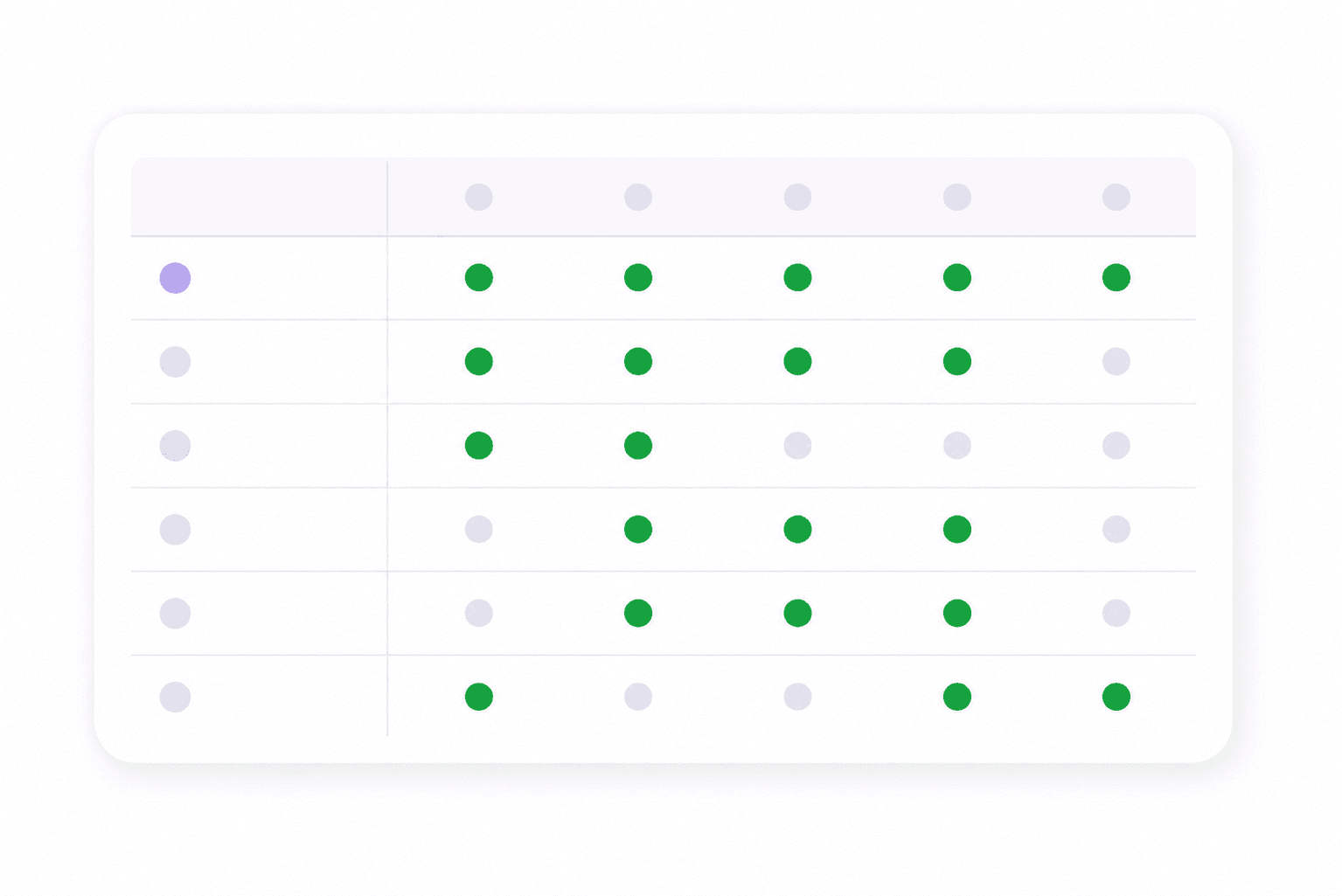
They need a readiness dashboard that gives them a clear picture of upcoming patients and shows, at a glance, who is ready and who is not.
Not by opening each chart one at a time.
Not by manually reviewing every file again and again.
But through a structured view of readiness across the schedule.
This kind of visibility helps staff identify risk earlier, prioritize attention better, and reduce the last-minute surprises that disrupt patient flow.
Why automation matters here
Another important part of this problem is that readiness status is often built manually.
Someone has to look through documents and decide whether required items are complete. That manual process is one of the biggest sources of wasted time.
A better approach is for the system to detect readiness automatically.
Instead of asking staff to manually identify whether something is present or missing, the system should interpret the available information and generate the readiness view for them.
That changes the nature of the work.
Staff should not spend hours trying to answer the question, “What is missing?”
They should already know the answer and be able to focus their time where it matters most.
How Carethink can help
Carethink helps practices move away from manual readiness tracking and toward a clear, operational view of who is ready and who is not.
Instead of asking staff to open charts one by one, review documents manually, and decide what is missing, Carethink gives teams a structured readiness view across incoming patients and upcoming dates.
Our approach focuses on two things.
First, readiness visibility across the schedule.
Carethink gives practices a dashboard-level view of patient readiness, so teams can quickly see which patients are ready, which are not, and where attention is needed.
Second, AI-powered readiness detection.
Rather than relying on manual review to determine what is present and what is missing, Carethink uses AI to interpret incoming documentation and generate readiness status automatically.
This helps practices spot issues earlier and manage readiness proactively.
The result is better control over patient flow, fewer last-minute surprises, less staff time spent on chart-by-chart review, and a more reliable way to keep visits and procedures on track.
Why this matters more than it seems
Patient readiness may sound like a narrow operational issue, but it has broad impact.
When readiness is poorly managed:
care gets delayed
schedules become unstable
staff lose time
last-minute cancellations increase
revenue is lost
And when readiness is managed well:
teams have more control
issues are identified earlier
schedules become more predictable
patients are less likely to face avoidable delays
This is one of those problems that often lives in the background but affects everything around it.
The shift practices need
Move from manual readiness checking to automated readiness visibility.
That means moving away from paper-based tracking, chart-by-chart review, and last-minute checks, and toward a system that gives teams a live, structured view of readiness across their upcoming schedule.
Because the goal is not just to store patient information.
The goal is to know, clearly and early, whether the patient is ready.
About the Author:
Joseph Pipia
Cofounder & CEO of Carethink
Joseph Pipia is a healthcare technology entrepreneur and product builder. He has built and scaled health tech products used by large hospitals and ambulatory centers, supporting care for millions of patients. He earned his MBA from MIT Sloan School of Management.