Why Referral Management Is Critical for Medical Practices
Learn how end-to-end inbound referral management helps specialty medical practices improve scheduling, care coordination, revenue, and patient access.
Article· 6 min read Joseph Pipia
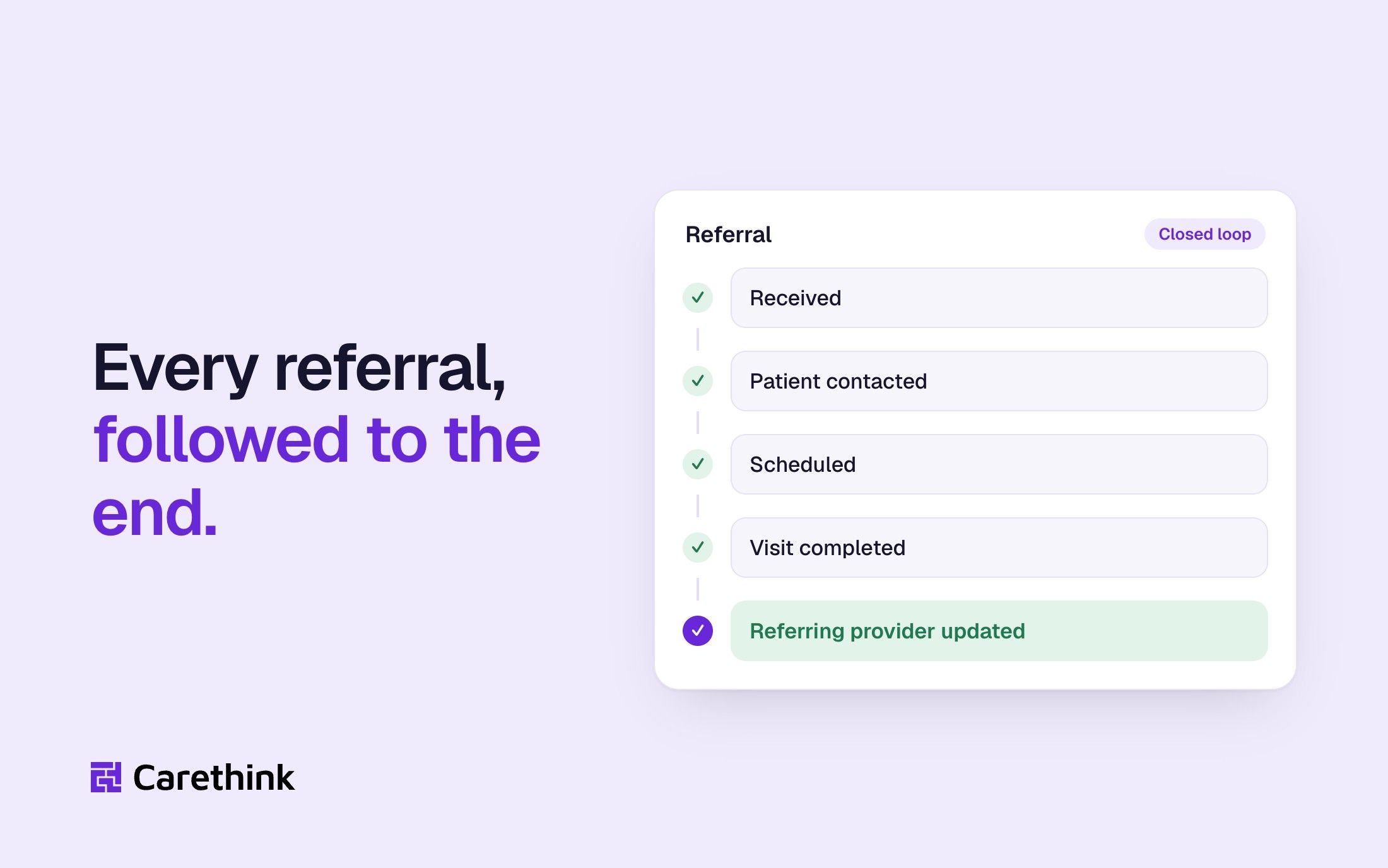
Inbound referral management is the process of receiving a patient referral, contacting the patient, scheduling the appointment, completing the visit, and communicating the outcome to the referring provider.
For specialty medical practices, this process directly affects patient access, new-patient scheduling, operational efficiency, revenue, and continuity of care.
A referral alone does not mean that the patient will receive care. The practice must receive and review the information, contact the patient, schedule the appropriate appointment, complete the visit, and return the relevant clinical information to the referring provider.
This is what end-to-end inbound referral management means.
What should a medical practice track for inbound referrals?
Every medical practice should be able to answer a few basic questions:
- How many referrals did we receive?
- Where did they come from?
- Which provider or service were they intended for?
- How quickly did we review each referral?
- How quickly did we contact each patient?
- How many patients were scheduled?
- How many completed their visits?
- Why were the remaining referrals not converted?
- Were urgent referrals identified and handled appropriately?
- Did the referring provider receive the appropriate clinical information after the visit?
Many independent practices cannot answer these questions reliably.
Referral information is often spread across faxes, emails, phone calls, voicemails, and handwritten notes. New-patient coordinators must collect the information manually and keep track of each case through spreadsheets, inboxes, and memory.
This makes referrals easy to delay, overlook, or lose.
Why is referral conversion important?
Referral conversion measures how many referred patients reach a defined milestone, such as scheduling an appointment or completing a visit.
This is an important operational metric for a specialty practice. A full schedule does not necessarily mean referrals are converting well. A practice can still lose or delay referred patients while keeping its schedule full. We explore this distinction in Overbooking Does Not Fix Referral Conversion. A primary care physician or another specialist has already identified a patient who may need specialty care. The practice must then help the patient move through the next steps.
Several factors influence whether a referred patient schedules and completes an appointment:
- How quickly the practice responds
- Whether the referral information is complete
- Whether the requested service is clear
- Whether the urgency of the case is understood
- Whether the patient receives enough information about the physician and practice
- Whether insurance coverage and expected patient responsibility are explained
- Whether the patient encounters scheduling or transportation barriers
A generic text message with a scheduling link may work for some patients. Others need more information before they are ready to schedule.
A short, informed conversation can make a meaningful difference. The coordinator can explain which provider will see the patient, what records are needed, how to prepare for the appointment, and what will happen next.
This gives the patient a clearer path into care.
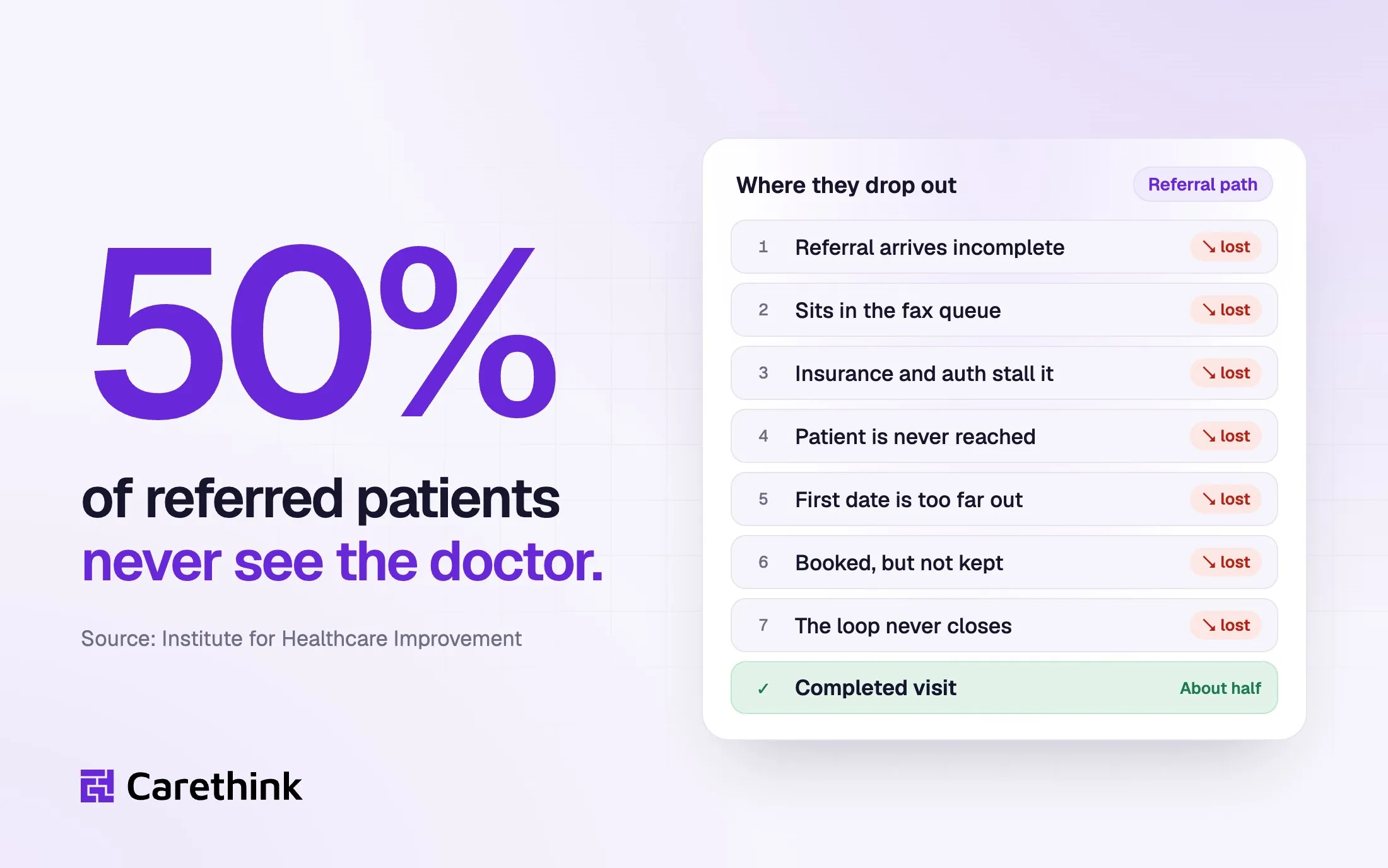
Why do medical practices lose referrals?
The largest problems often happen before anyone contacts the patient.
Referrals arrive through several channels. Some come by fax. Others arrive by email, voicemail, phone call, or direct communication between physicians.
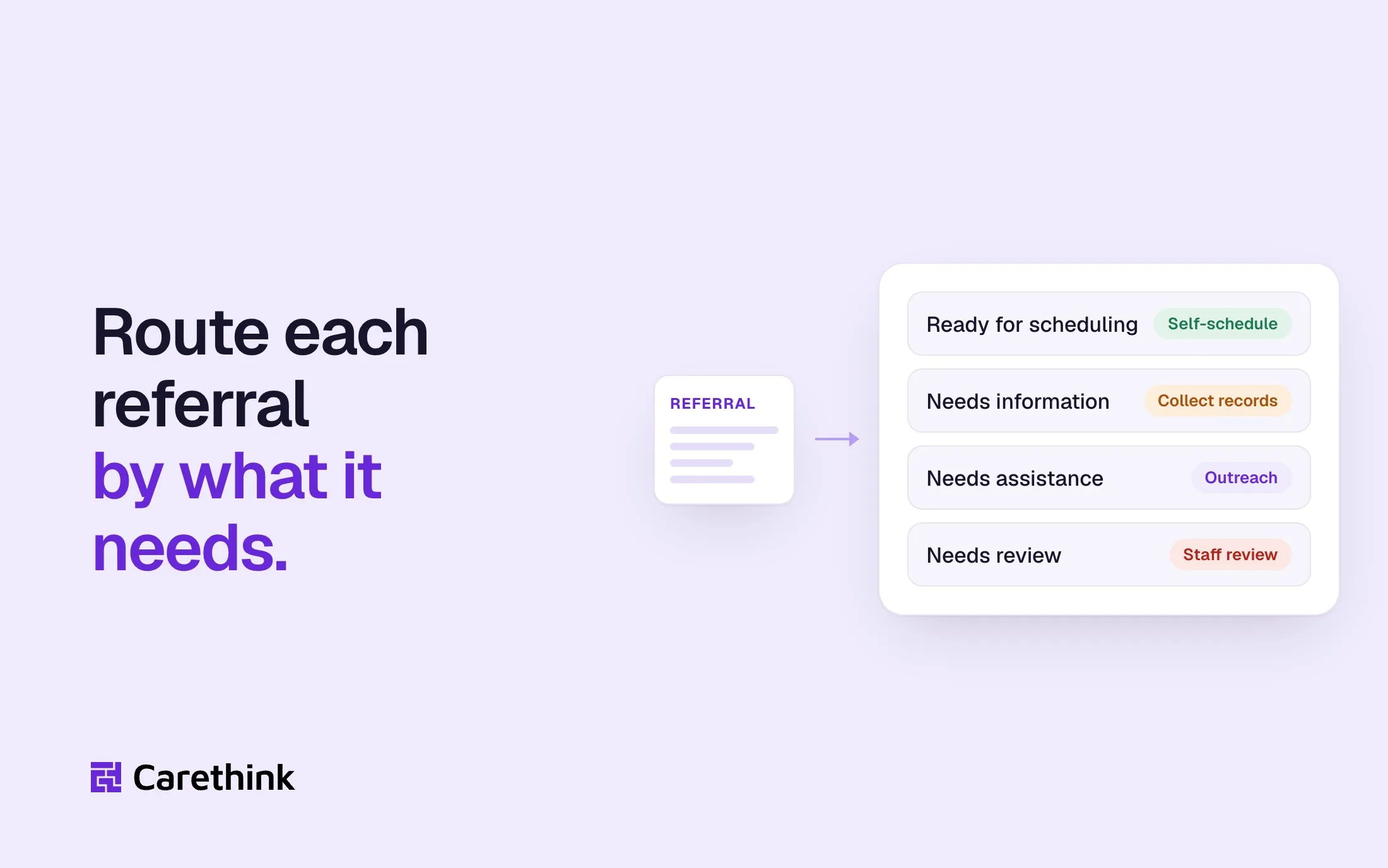
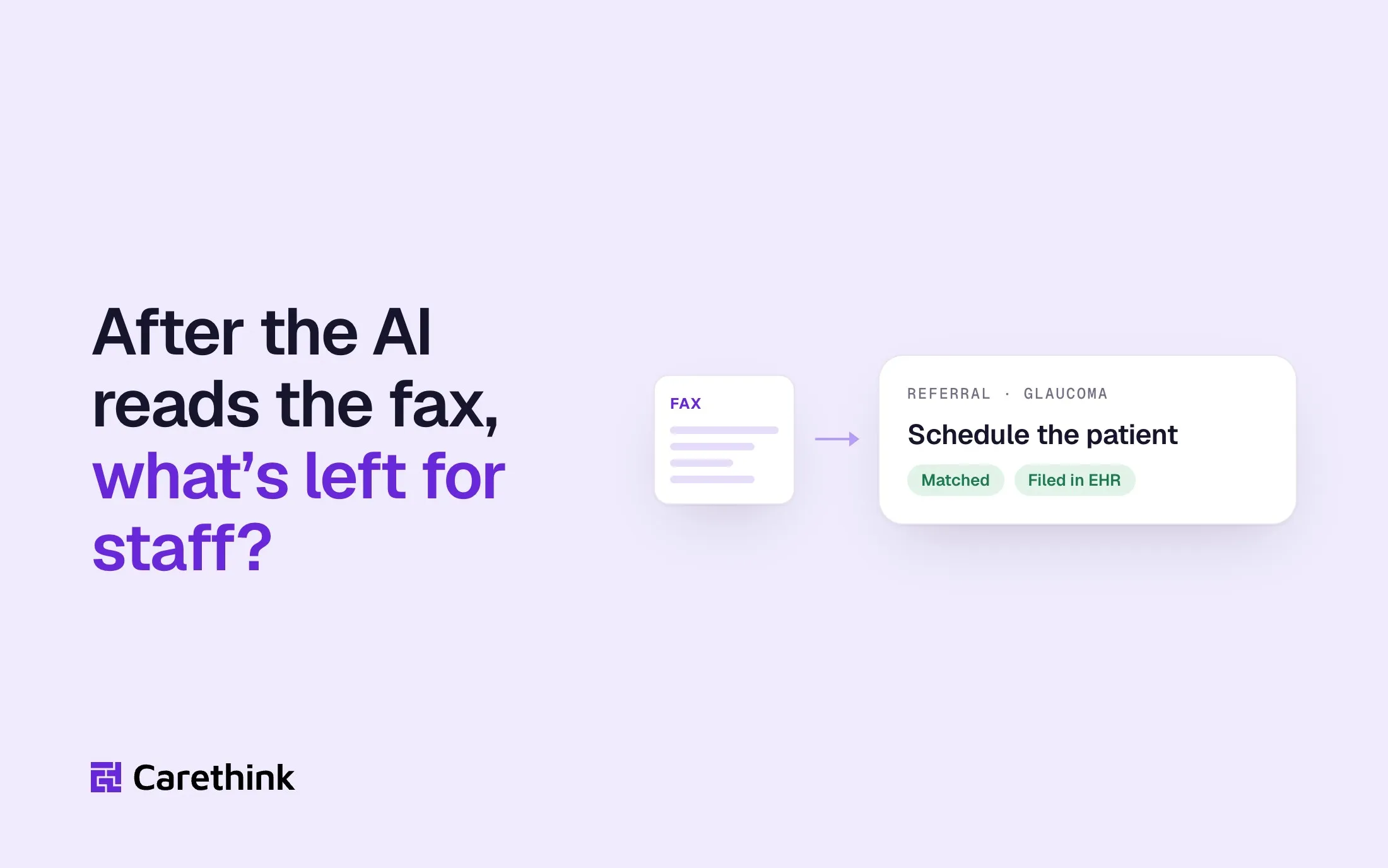
The practice must identify the referral, extract the relevant information, determine where it belongs, check whether anything is missing, assign it to the right person, and follow it through scheduling and completion.
When this work is fragmented, coordinators spend much of their time searching, checking, and following up.
The longer the delay, the greater the chance that the patient will disengage from the process or remain untreated.
How does referral management affect revenue?
Inbound referrals are a major source of new patients for many specialty practices.
Improving the percentage of referred patients who schedule and complete appropriate visits allows a practice to serve more patients from the demand it already receives.
Consider a practice receiving hundreds of referrals each month. Even a modest improvement in scheduling and visit completion can produce a meaningful increase in patient volume and revenue.
The practice does not necessarily need to spend more on advertising to create that improvement. It may first need to respond faster, follow up consistently, reduce administrative gaps, and make the scheduling experience easier for patients.
Referral conversion should therefore be treated as an operational, patient-access, and financial metric.
How does referral management support care coordination?
Referring providers need to know what happened to the patients they referred.
They may need confirmation that the referral was received, whether additional information is required, whether the patient was successfully contacted, and whether the appointment was scheduled. After the visit, they may need chart notes, clinical findings, or the treatment plan.
Without this communication, the referral can feel as though it disappeared into a black hole.
The purpose of these updates is care coordination. They help the referring provider continue managing the patient’s care and reduce the need for repeated calls, duplicate faxes, and manual status checks.
The practice should apply its communication standards consistently rather than providing a different level of service based on how many patients a particular provider or organization refers.
Why do reputable physicians still need a strong referral process?
Referrals in specialty care are often driven by the reputation and expertise of individual physicians. That is unlikely to change. Referring providers want to send patients to doctors whose clinical judgment and abilities they trust.
However, the physician’s reputation is only one part of the referral experience.
A referring doctor may strongly respect a specialist’s clinical ability and still become frustrated if patients are difficult to schedule, referrals are repeatedly lost, urgent cases are not recognized, or chart notes never come back.
When the process is unreliable, the referring doctor may need to spend additional time checking on the patient, resending information, calling the specialist’s office, or explaining delays.
Over time, the referring doctor may decide that another qualified specialist offers a more predictable process for the patient.
A reliable referral process therefore supports the physician’s clinical reputation.
Clinical reputation may generate the initial referral. The process that follows determines whether the patient receives timely, coordinated care.
What does an effective inbound referral process look like?
A strong referral process should:
- Capture referrals from every inbound channel
- Place them in one organized workflow
- Identify the patient, referring provider, requested service, and clinical urgency
- Assign each referral to a responsible staff member
- Contact the patient within an appropriate timeframe
- Make scheduling simple and clear
- Monitor whether the appointment was completed
- Record why a referral was not converted
- Communicate necessary status information
- Return chart notes or clinical results after the visit
- Report conversion rates by provider, source, location, and service
The goal is to ensure that every referral receives appropriate attention from the moment it arrives until the patient completes the visit and the necessary clinical information is returned.
What should specialty practices look for in referral management software?
Referral management software for specialty practices should help manage the full path from referral receipt to a clear outcome. That includes capturing referrals across channels, understanding why the patient was referred, identifying urgency, routing the patient to the appropriate provider or location, coordinating follow-up, and tracking whether the patient schedules and completes the visit.
The strongest systems should also give practice leaders visibility into referral volume, response times, conversion rates, lost referrals, and performance across providers, locations, and referral sources.
The business case for end-to-end referral management
Medical practices often invest heavily in building physician reputations and making their services accessible to patients. Yet many do not have a reliable process for managing the referrals they already receive.
End-to-end inbound referral management improves three critical parts of practice operations.
First, it helps more referred patients reach scheduled and completed visits.
Second, it improves care coordination by creating a predictable process for receiving referrals, contacting patients, and returning clinical information.
Third, it helps practice leaders understand their referral volume, operational performance, capacity needs, and dependence on individual sources.
A respected specialist may attract referrals, but the quality of the process affects whether patients successfully reach care.
For independent and specialty medical practices, referral management is one of the clearest opportunities to improve patient access, operational efficiency, revenue, and long-term stability.
About the author

Joseph Pipia is a healthcare technology entrepreneur and product builder. He has built and scaled health tech products used by large hospitals and ambulatory centers, supporting care for millions of patients. He earned his MBA from MIT Sloan School of Management.
Joseph Pipia on LinkedIn