How to Convert More Referrals Into Appointments
Learn how specialty practices can convert more referrals into appointments by matching each patient to the right scheduling and follow-up workflow.
Article· 4 min read Joseph Pipia
Referral conversion is work. Sending every referred patient a scheduling link may create an opportunity to book, but it does not ensure that the patient can or will move forward.
Each referral contains information that should determine what happens next. The practice must understand why the patient was referred, whether the case is complete, how quickly the patient should be seen, and what may prevent scheduling. The referral then needs the right action and follow-up until there is a clear outcome.
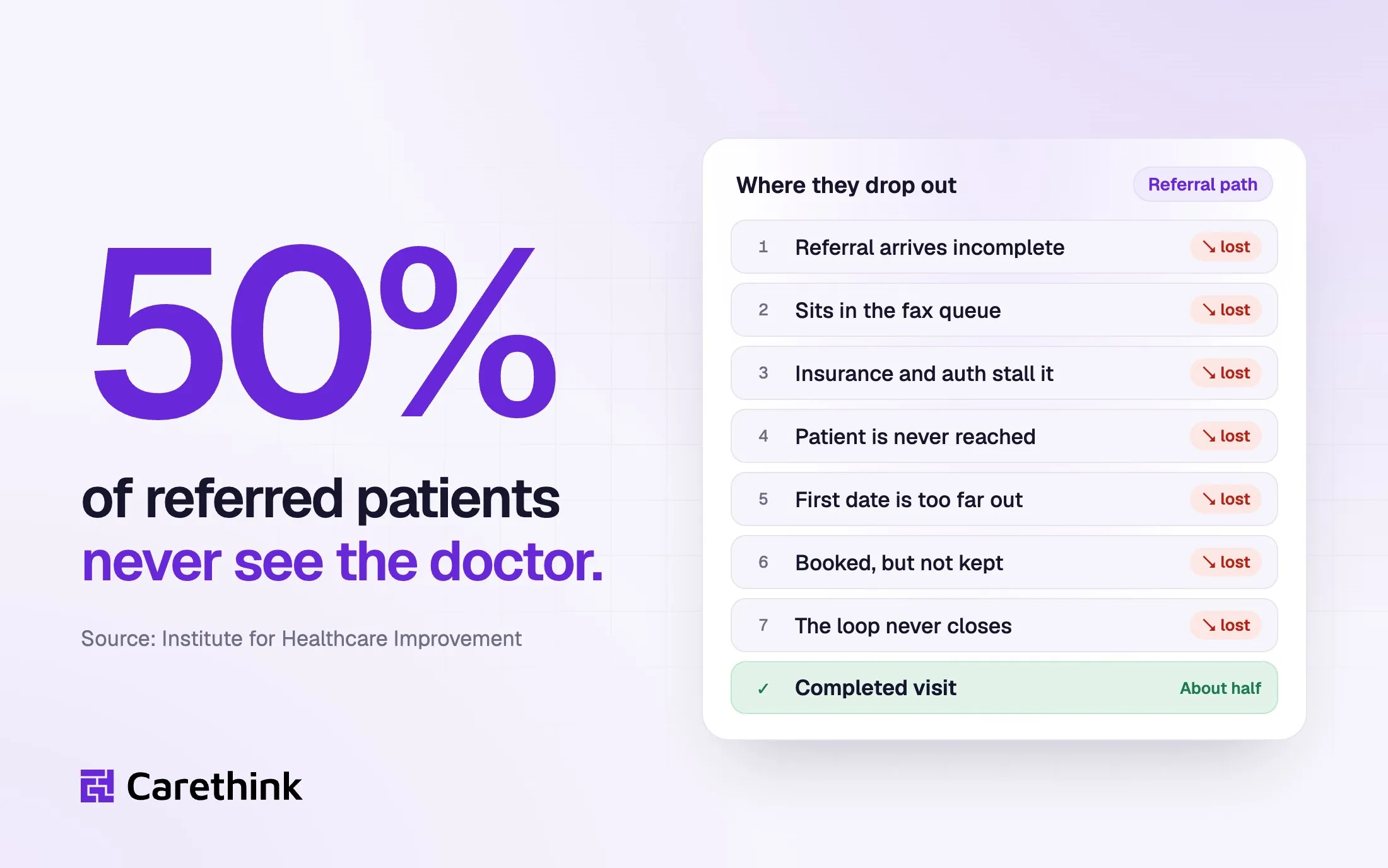
Research shows how much demand can disappear during this process. In one study of 103,737 specialty-referral scheduling attempts, only 34.8% resulted in a documented completed appointment. Low scheduling rates, clinic-level variation, wait times, and travel distance contributed to the gap.
A scheduling link is a tool, not a conversion strategy
Self-scheduling works well when the referral is routine, complete, and appropriate for a clearly defined provider, location, and visit type. Outside those conditions, a generic link can transfer the complexity from the practice to the patient.
The patient may not know which specialist to choose. The requested service may not appear in the scheduling menu. Insurance or authorization may need review. Records may be missing. The patient may also need an explanation of why the visit matters or what will happen next.
A 2021 study of centralized specialty scheduling reinforces this distinction. Centralization reduced average scheduling cycle time from 21 to 15 days, but its effect on completed referrals varied across specialties. Making scheduling easier improved speed, but did not consistently produce the final outcome.
Route each referral according to its content
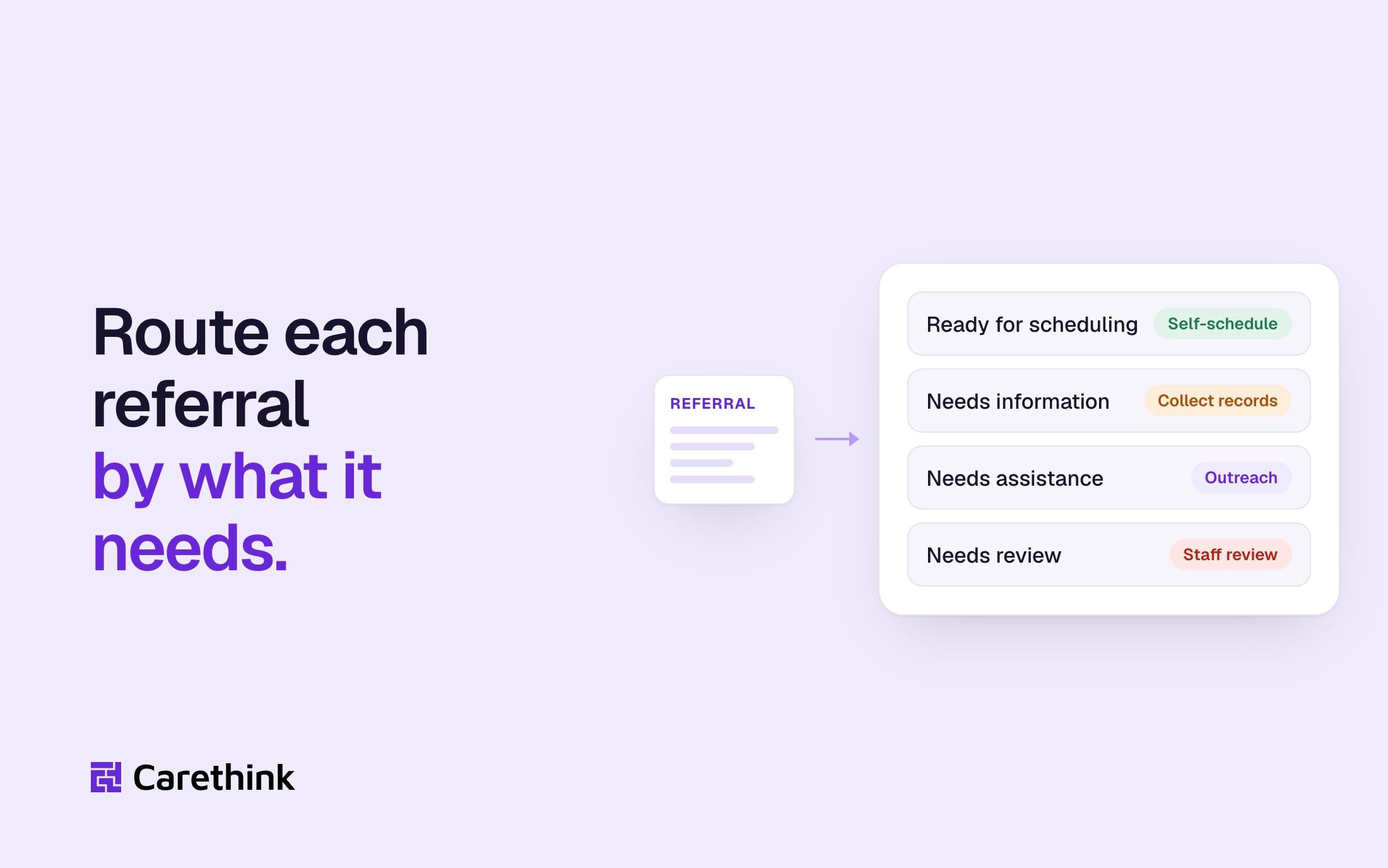
Instead of applying one action to every referral, practices can separate referrals into operational paths:
- Ready for scheduling: The referral is complete, routine, and suitable for guided self-scheduling.
- Needs information: Records, insurance details, authorization, or other documents must be collected first.
- Needs assistance: The patient needs informed outreach to select the right provider, location, or appointment.
- Needs review: Urgent, complex, or uncertain cases require clinical or operational review before scheduling.
This content-based approach matters in ophthalmology. An eye-care referral study identified poor communication and patient financial or insurance concerns among the barriers reported by primary care physicians. Those problems cannot be resolved by sending the same link to every patient.
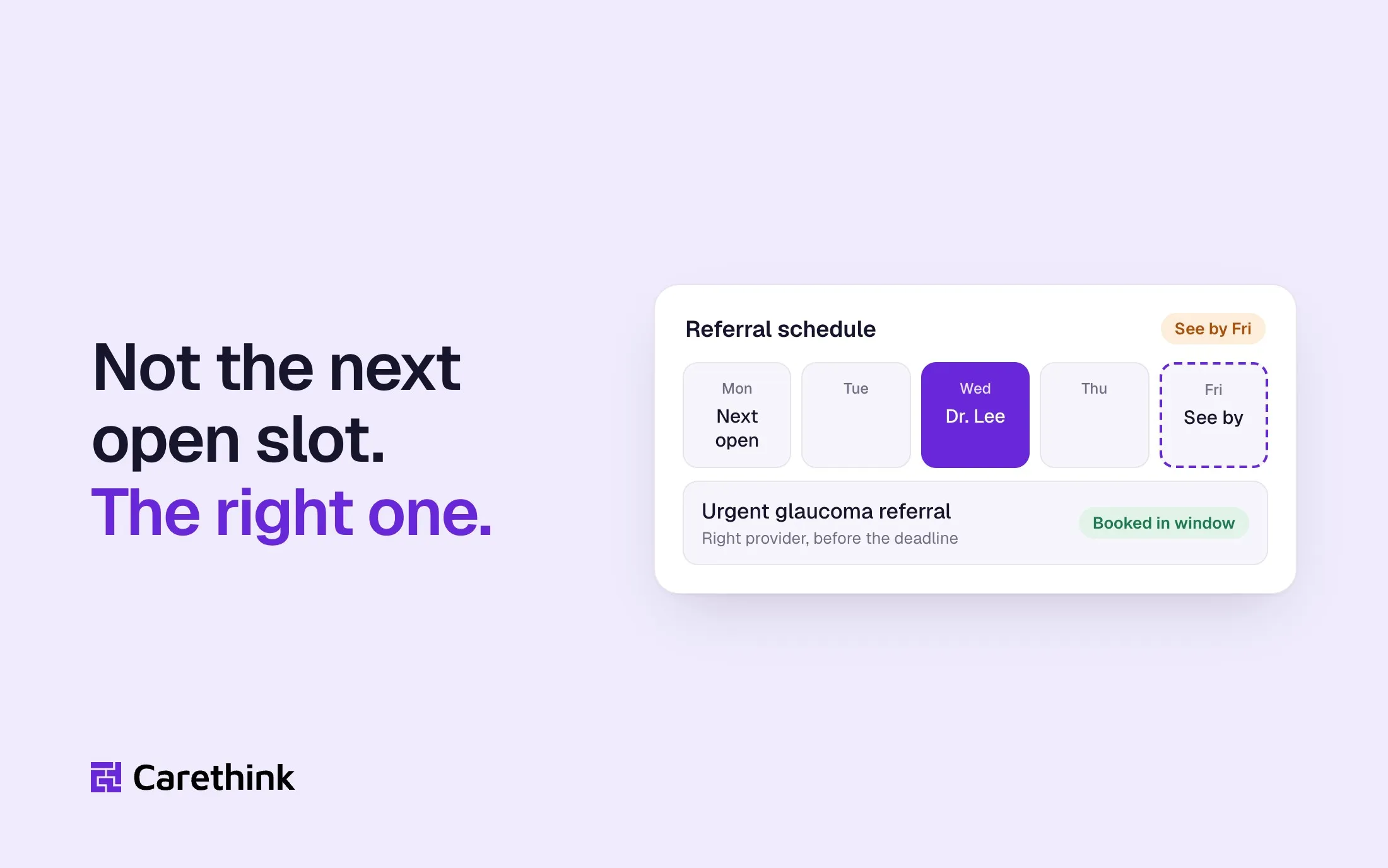
Our related article, How Medical Practices Should Schedule Referrals, explains how urgency, capacity, payer requirements, and patient circumstances should shape the appointment decision.
Follow every referral until there is an outcome
Routine, complete referrals may be directed to guided self-scheduling. Those referrals still need monitoring. If a patient does not use the link, the case should return to an active outreach queue instead of disappearing.
Other referrals should begin with informed human outreach. A staff member may need to explain the practice, the physician, the reason for the visit, insurance requirements, required records, or what the patient should expect. Patients may also have concerns or questions that must be answered before they are comfortable scheduling.
Every referral should have a current status, responsible owner, next action, and deadline. Practices should define how quickly contact begins, how many attempts are made, which channels are used, and when a case is escalated or closed. Each outcome should be recorded, including scheduled, unable to reach, declined, redirected, or blocked by missing information.
Measure conversion as an operating and financial result
Leadership should track the complete funnel:
Referrals received → ready to schedule → patients reached → appointments scheduled → visits completed
Important measures include time to first action, referral aging, contact rate, scheduled conversion, completed-visit conversion, and loss reasons. Results should be visible by location, provider, service line, and referral source.
Where AI can improve referral conversion
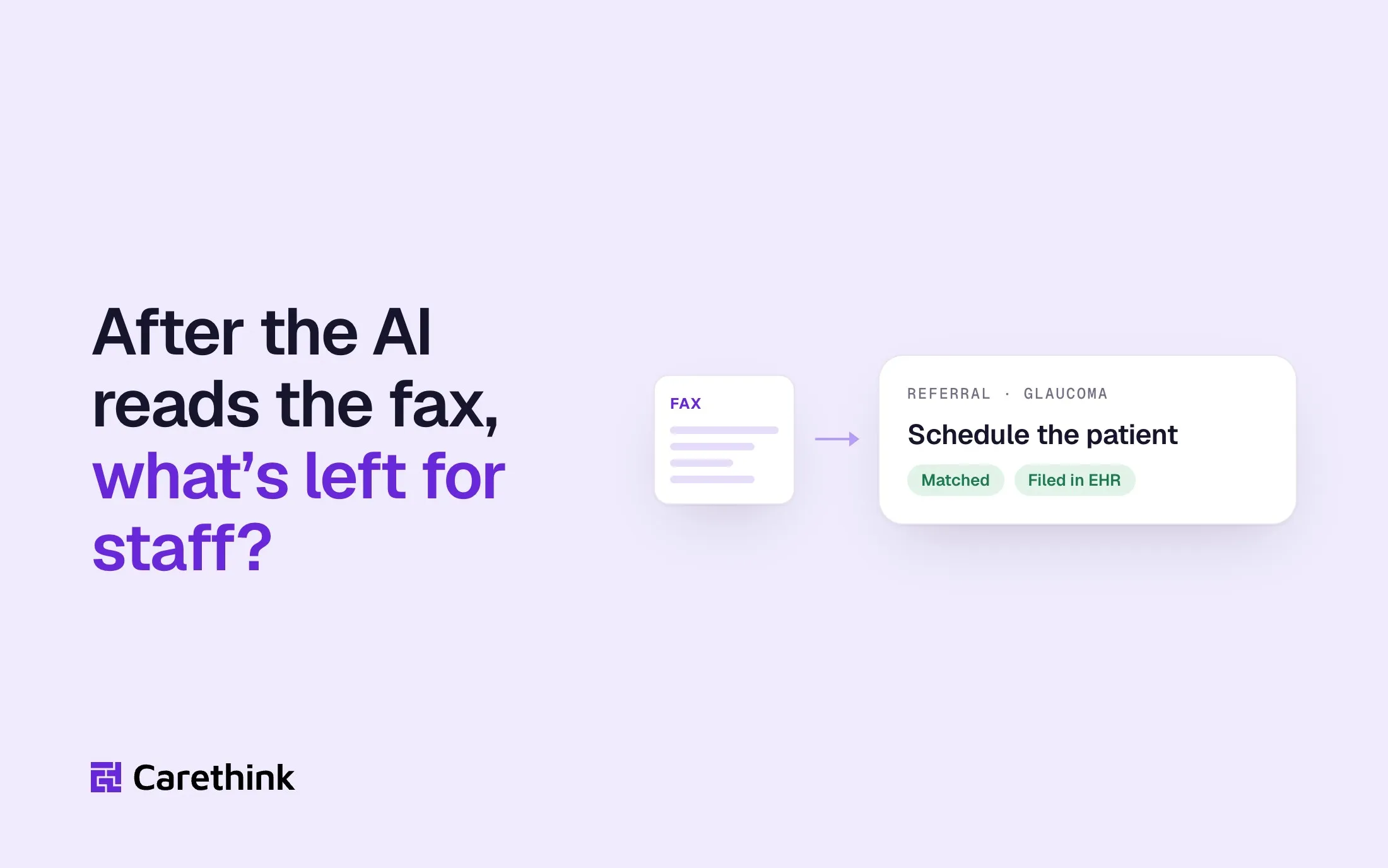
Practical AI can read incoming faxes and messages, extract relevant details, identify missing information, apply practice rules, and route each referral into the appropriate path. It can initiate self-scheduling for straightforward cases while keeping complex, urgent, or stalled referrals visible for staff action.
Carethink referral automation is built around this workflow. It helps specialty practices capture referrals, understand what each patient needs, prioritize the next action, organize follow-up, and track conversion through scheduled and completed visits.
The objective is not to send more links. It is to ensure that every appropriate referral receives the work required to become a completed visit.
FAQs
Does self-scheduling improve referral conversion?
It can improve conversion for routine, complete referrals. Complex, urgent, or incomplete referrals may require review, informed outreach, or additional documentation before the patient can schedule correctly.
What happens when a patient does not use the scheduling link?
For a routine referral directed to self-scheduling, the case should return to an active follow-up queue with a defined next action. A link that was sent but never used is an unresolved referral, not a completed task.
What should practices measure besides scheduled appointments?
Track completed visits, time to first action, patient contact rate, referral aging, missing-information delays, and standardized reasons referrals did not convert.
Sources used
- Patel MP, et al. Closing the Referral Loop. Journal of General Internal Medicine. 2018.
- Bongers Q, et al. Does a Centralized Scheduling Process Improve Referral Timeliness?. WMJ. 2021.
- Holley CD, Lee PP. Primary Care Provider Views of the Current Referral-to-Eye-Care Process. Investigative Ophthalmology & Visual Science. 2010.
- Carethink. How Medical Practices Should Schedule Referrals.
- Carethink. Referral Automation.
About the author

Joseph Pipia is a healthcare technology entrepreneur and product builder. He has built and scaled health tech products used by large hospitals and ambulatory centers, supporting care for millions of patients. He earned his MBA from MIT Sloan School of Management.
Joseph Pipia on LinkedIn