Half of Referred Patients Never See the Doctor. Where Do They Go?
About half of referrals never become completed visits. See the seven points where referred patients drop out and how operators can close each gap.
Article· 4 min read Joseph Pipia
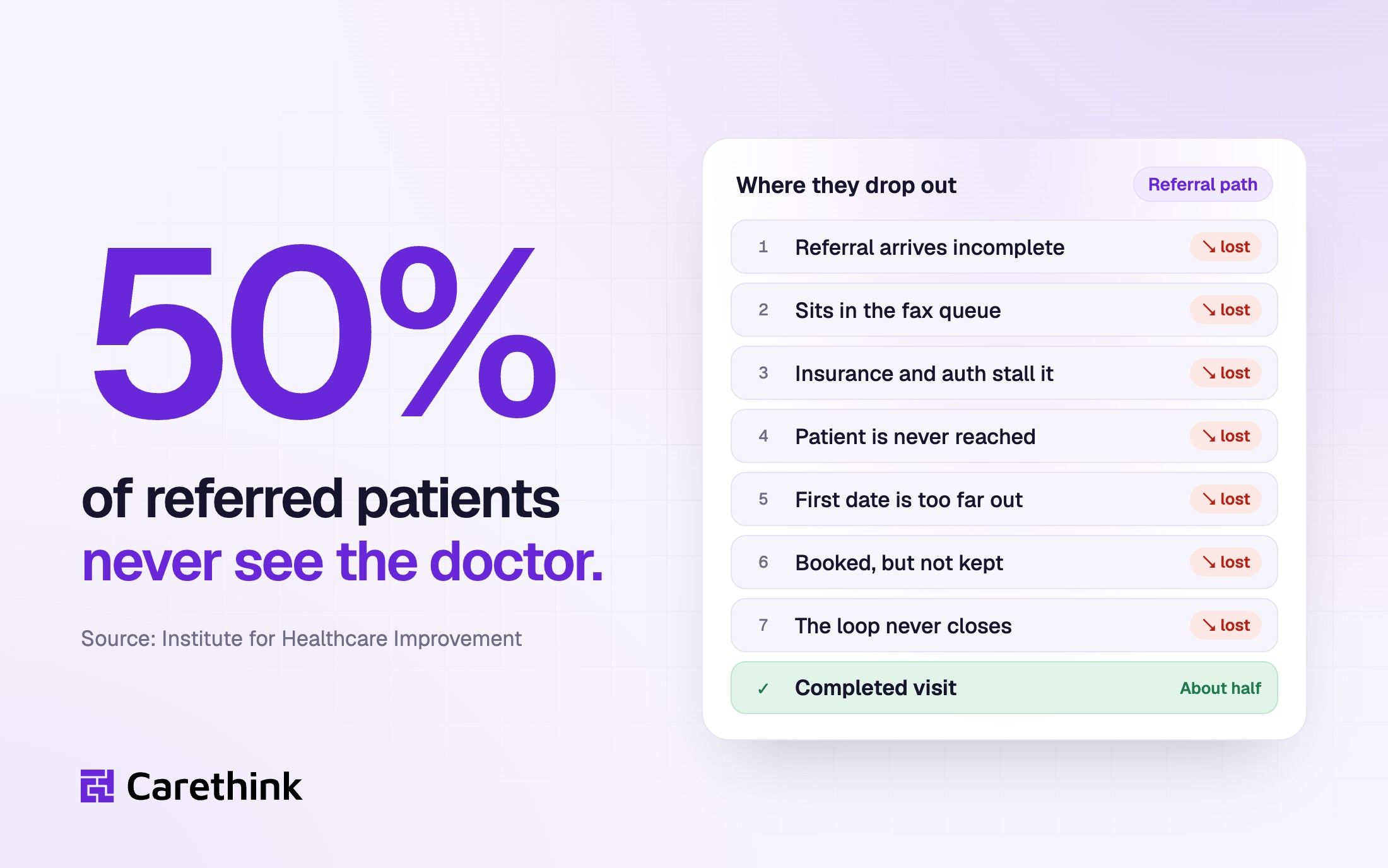
Referral leakage is the gap between the referrals a practice receives and the visits it completes. Most leaders underestimate how big it is. The Institute for Healthcare Improvement cites research showing only about half of specialist referrals are completed. A Duke Health study of more than 100,000 referral scheduling attempts found that only 34.8% ended in a documented completed appointment.
Patients rarely drop out at a single point. They leave a few at a time, at each step between the referral arriving and the visit taking place. In our conversations with practice leaders, the same pressure points come up again and again.
Stage 1: The referral arrives incomplete
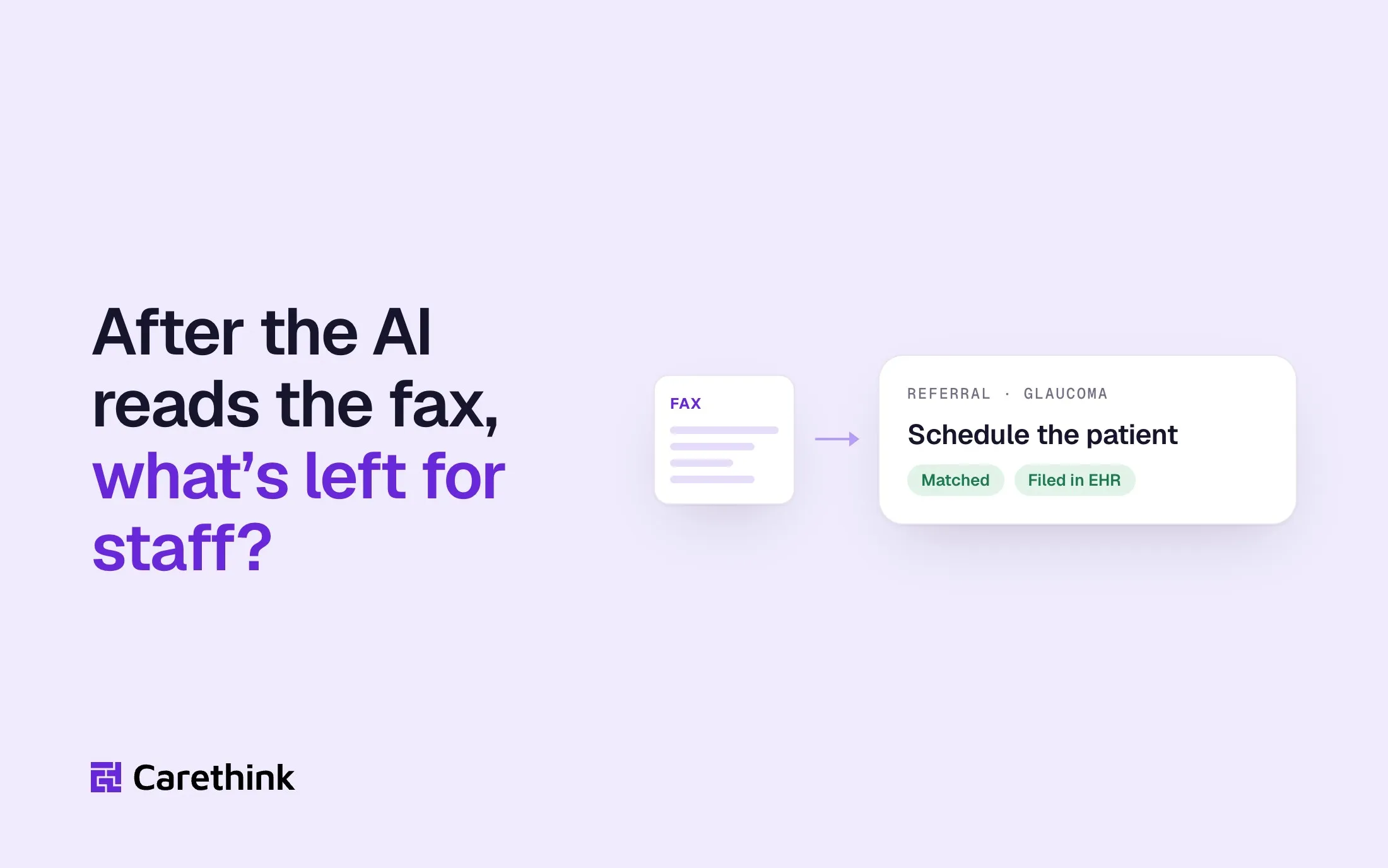
Many referrals still arrive by fax. Insurance details, clinical notes, a working phone number or the reason for the referral are often missing. Every gap means a call back to the referring office. One study cited by IHI found that almost 70% of specialists received limited information from the referring clinician before seeing the patient.
Stage 2: The referral sits in a queue
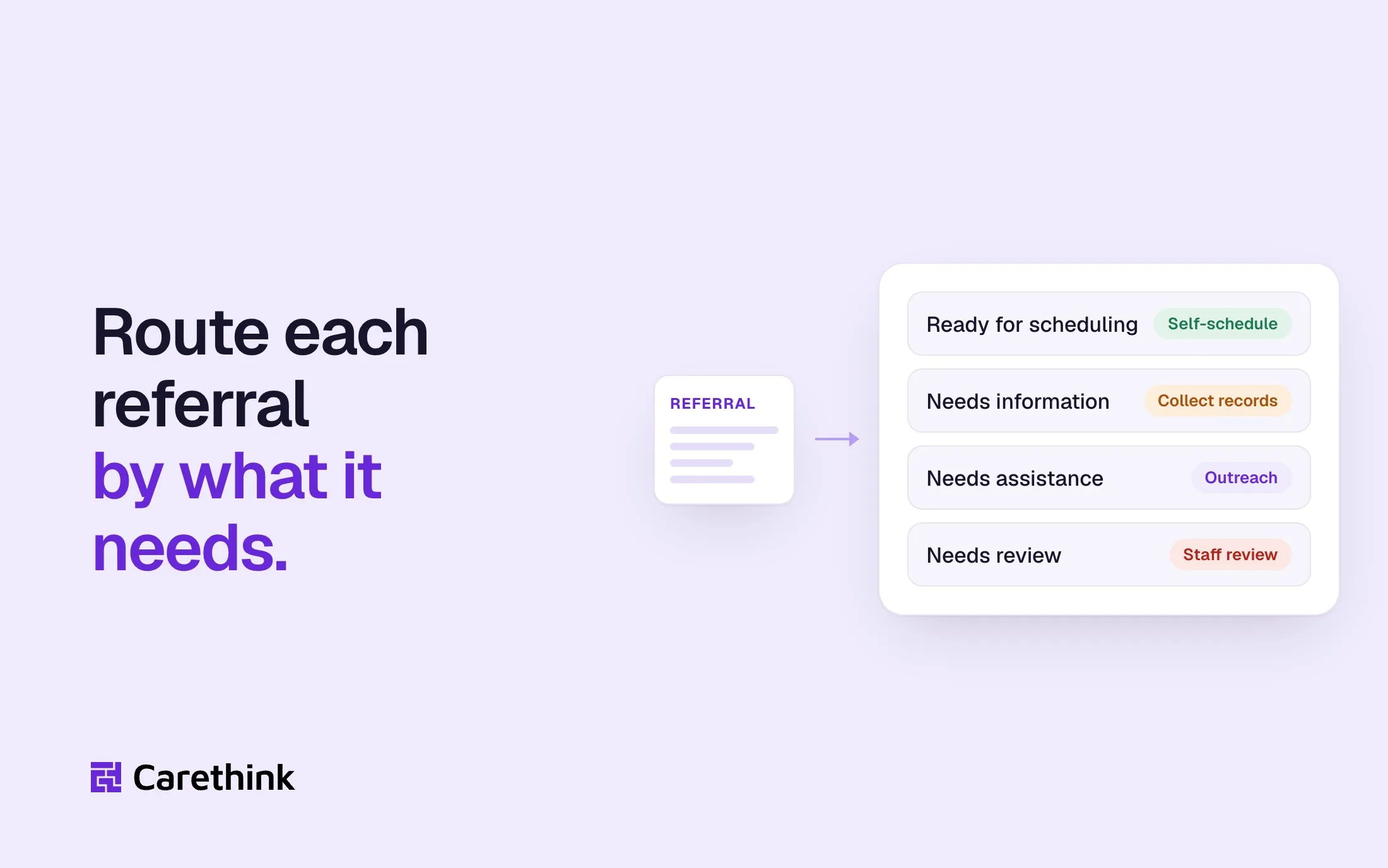
In many practices, every incoming fax lands in a single queue and staff sort it by hand. Referrals sit next to refill requests, records requests and insurance correspondence. A newer employee can easily misfile one. Leaders often tell us the only way they find these problems is by checking archived faxes themselves.
Staffing makes this harder. The same front-office team often handles faxes, phones, check-in and medical records. When everyone focuses on the fax backlog, the phones suffer, and the reverse is also true. Without one owner and clear status tracking, referrals wait.
Stage 3: Insurance and authorization stall it
Eligibility checks and prior authorization can add days or weeks. In the AMA’s 2024 prior authorization survey, 94% of physicians said prior authorization delays care. Another 78% said it sometimes or often leads patients to abandon treatment. Electronic tools have helped, but some payers still require paper forms or phone calls.
Stage 4: The patient is never reached
This is one of the biggest sources of leakage. Many practices wait for the referred patient to call them, or send a letter and leave it there. A lot of those patients never call. They forget, put it off or assume the practice will reach out.
Even when the practice does try, phone volume gets in the way. When staff are busy with patients at the front desk, calls go unanswered and voicemails pile up unreviewed. Each missed callback is a referred patient who may never schedule.
Patients also make their own decisions. In a national study of primary care referrals, the substantial number of patients skipped a specialty visit were believing the problem had resolved and lack of time.
Stage 5: The first available date is too far out
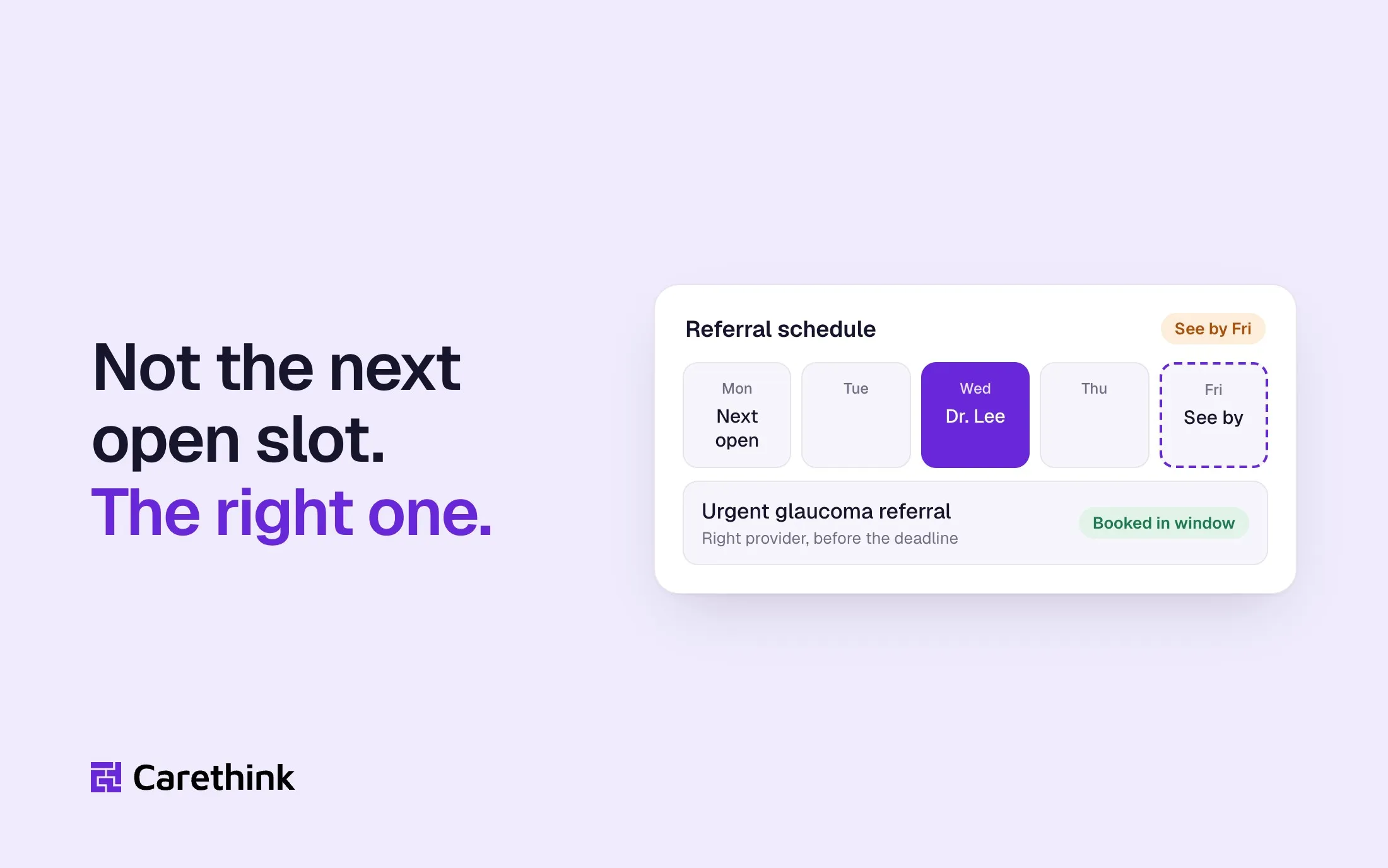
An AMN Healthcare survey found the average wait for a new-patient appointment across 15 large U.S. metro areas was 26 days in 2022. The Duke study linked longer waits to lower completion. Patients who wait a month often book elsewhere or give up.
Stage 6: The appointment is booked but not kept
A scheduled visit can still fail. Without reminders, clear prep instructions and an easy way to reschedule, a no-show often ends the referral for good.
Stage 7: The loop never closes
IHI cites research showing 25% of primary care clinicians did not hear back from the specialist within four weeks. Referral sources notice, and it affects where they send their next patient.
How to measure and reduce referral leakage
The most effective way to stop losing referred patients is to move first and move fast. Many practices wait for the patient to call after receiving a referral. By then, the patient may have decided the problem resolved, gotten busy or booked somewhere else. Contacting patients quickly, while the need still feels urgent, keeps far more of them on the path to a visit.
A few practical steps:
- Reach out first, and fast. Contact the patient as soon as the referral is reviewed instead of waiting for them to call. Follow up by phone, text and email until they schedule or decline.
- Track every referral from receipt to completed visit, with a status at each stage.
- Measure conversion and time by stage. An overall completion rate shows that leakage exists. Stage-level data shows where.
- Separate referrals from other inbound work. Sorting faxes and voicemails by type keeps referrals from getting buried.
- Assign clear ownership with response-time targets for review and first patient contact.
- Make the work visible. Leaders should see what is done and what is waiting without auditing archives.
- Start authorization early, and report back to referral sources.
For more, see Why Referral Management Is Critical for Medical Practices and How to Convert More Referrals Into Appointments.
FAQs
What is referral leakage?
Referral leakage is the share of referred patients who never complete a visit with the practice they were referred to. They may go elsewhere, delay care or skip it entirely.
What percentage of referrals are completed?
It depends on how completion is measured. Duke Health’s EHR data showed 34.8% of scheduling attempts ended in a documented visit. A national survey-based study found 79% to 83% of patients completed referrals within three months. IHI cites research showing roughly half are completed.
How can a practice reduce referral leakage?
Track each referral through every stage, measure where patients drop out, and fix the biggest gaps first. Those are usually intake, first contact, authorization and wait times.
Sources
- Patel MP, et al. Closing the Referral Loop. J Gen Intern Med, 2018
- Forrest CB, et al. Specialty Referral Completion Among Primary Care Patients. Annals of Family Medicine, 2007
- IHI / NPSF. Closing the Loop: A Guide to Safer Ambulatory Referrals in the EHR Era
- AMA. 2024 Prior Authorization Physician Survey
- AMN Healthcare. 2022 Physician Appointment Wait Times Survey
About the author

Joseph Pipia is a healthcare technology entrepreneur and product builder. He has built and scaled health tech products used by large hospitals and ambulatory centers, supporting care for millions of patients. He earned his MBA from MIT Sloan School of Management.
Joseph Pipia on LinkedIn