Meeting Payer and Referrer Commitments in Ophthalmology
Learn how AI helps ophthalmology practices prioritize referrals, detect urgency, meet deadlines, and strengthen relationships with referral partners.
Article· 2 min read Joseph Pipia
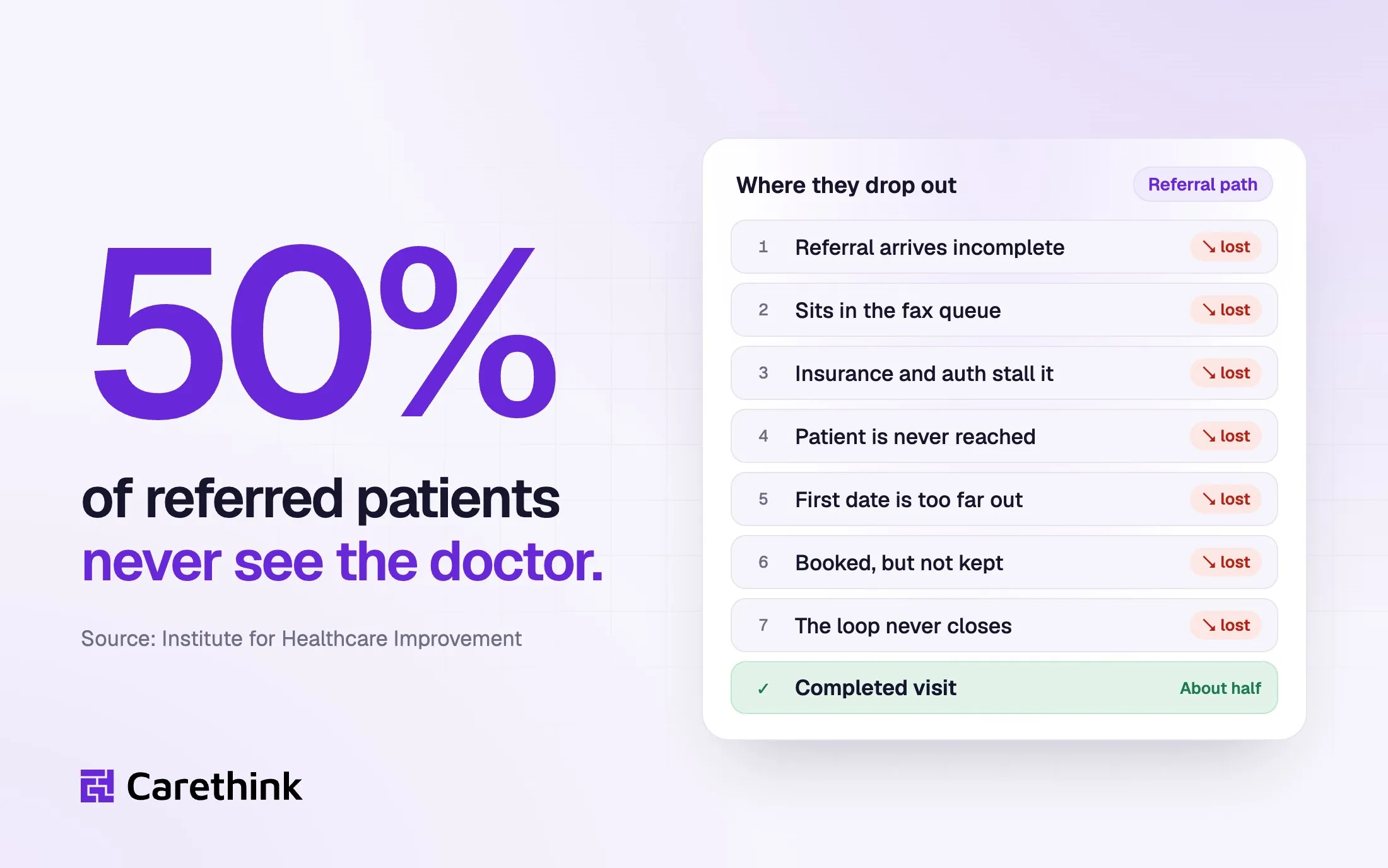
Ophthalmology practices operate within a complex patient referral ecosystem. Patients come from many different sources: payers, primary care providers (PCPs), optometrists, and co-management partners. Each of these stakeholders has expectations around how quickly their patients are seen and how reliably the practice delivers care.
Meeting those expectations goes beyond service quality, in many cases, it directly affects referral relationships, reimbursement, compliance, and reputation.
The Hidden Complexity of Patient Flow
On the surface, patient scheduling seems straightforward. Practices configure calendars with different appointment types: new patients, follow-ups, post-op visits, urgent cases, and so on.
But in reality, patient flow becomes messy very quickly if it isn’t managed intentionally.
Different referrals can carry different clinical and operational requirements:
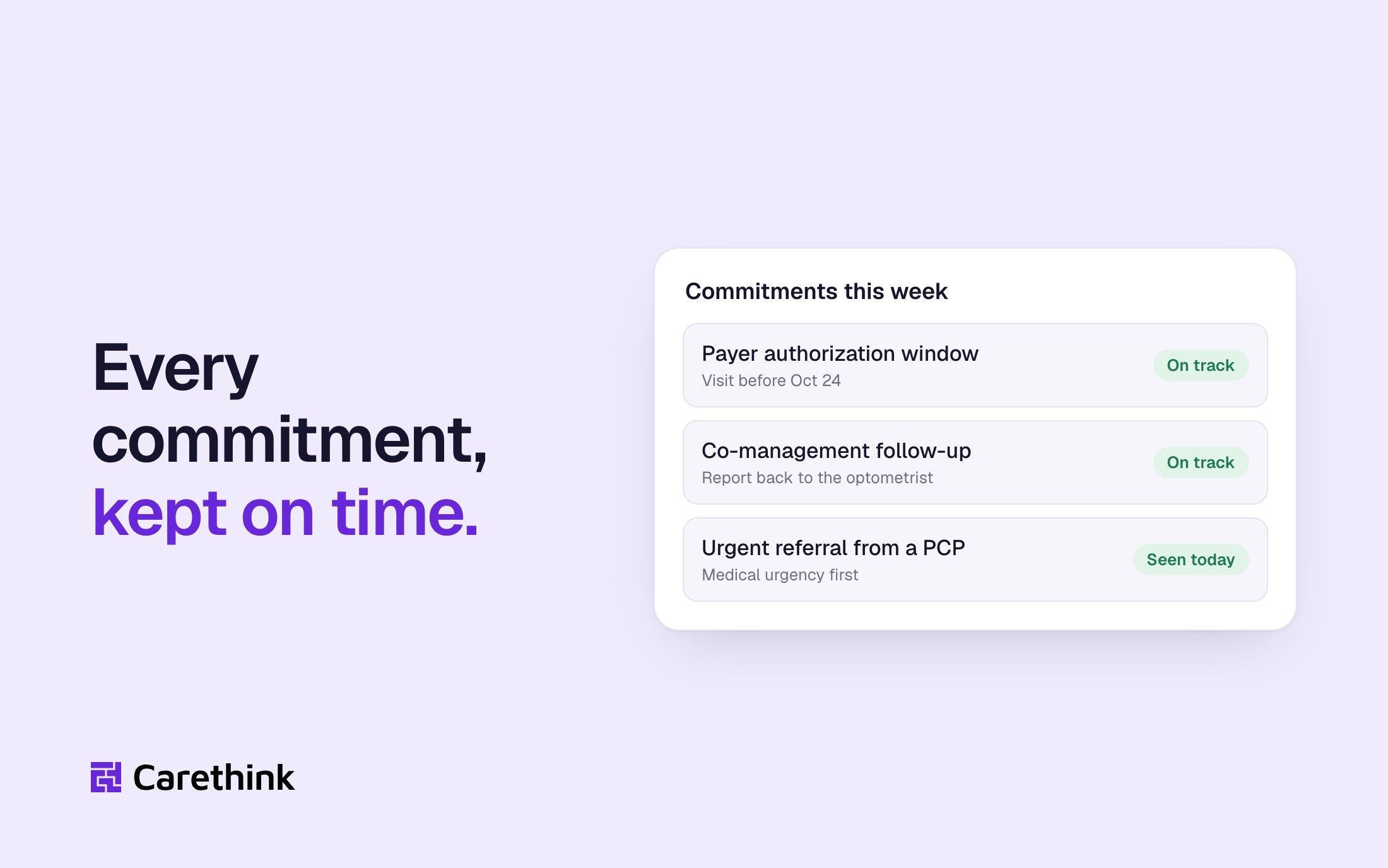
- Medical urgency may require faster evaluation
- Payer or authorization requirements may affect timing
- Co-management arrangements may define expected follow-up
- Practice or contractual rules may establish scheduling windows
- Provider and location availability affect where the patient can be seen
When these requirements are not managed reliably:
- Patients may experience unnecessary delays
- Referring providers may lose confidence in the process
- Operational and contractual requirements may be missed
- The practice may lose referrals and damage its reputation
Why Manual Prioritization Doesn’t Scale
Many practices try to manage this complexity manually:
- Excel spreadsheets with referral rules
- Front desk instructions on which patients to prioritize
- Ad hoc communication between staff members
While this can work in theory, it’s very hard to execute consistently in practice.
Manual processes depend heavily on people remembering rules, interpreting urgency correctly, and acting fast under pressure. As patient volume grows, ensuring compliance with different service-level agreements becomes increasingly difficult.
We’ve seen this challenge repeatedly across ophthalmology practices.
This is an Execution Problem
At its core, this is a process execution problem.
Different referrals require different operational decisions:
- What is the reason for referral?
- What is the medical urgency?
- Which provider and location are appropriate?
- Are payer, authorization, or co-management requirements involved?
- What is the latest acceptable appointment date?
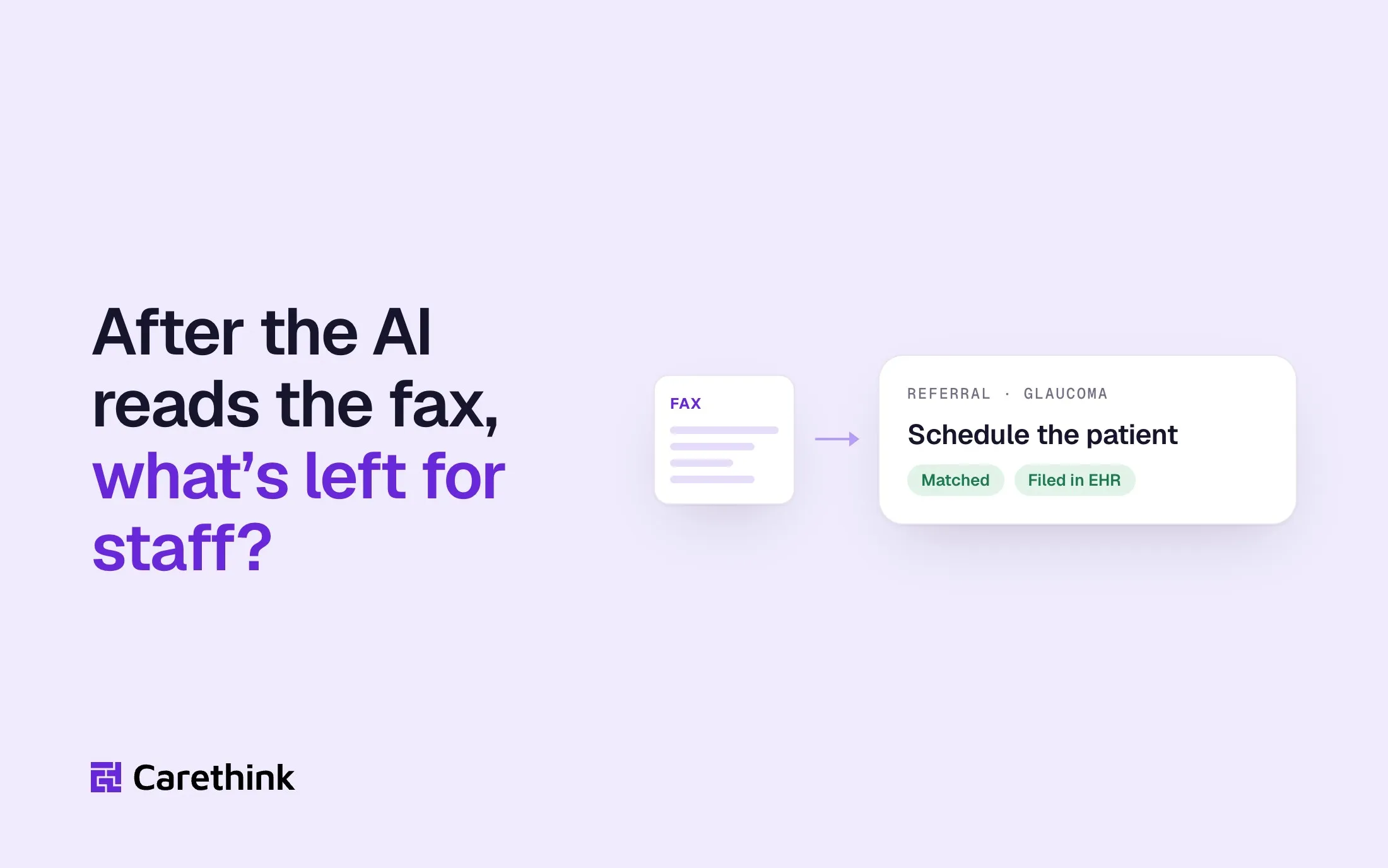
Making these decisions consistently is difficult when the information is spread across faxes, EHRs, inboxes, spreadsheets, and staff knowledge.
How referral management software helps ophthalmology practices manage these workflows
Referral management software can help practices turn incoming referral information into clear operational decisions.
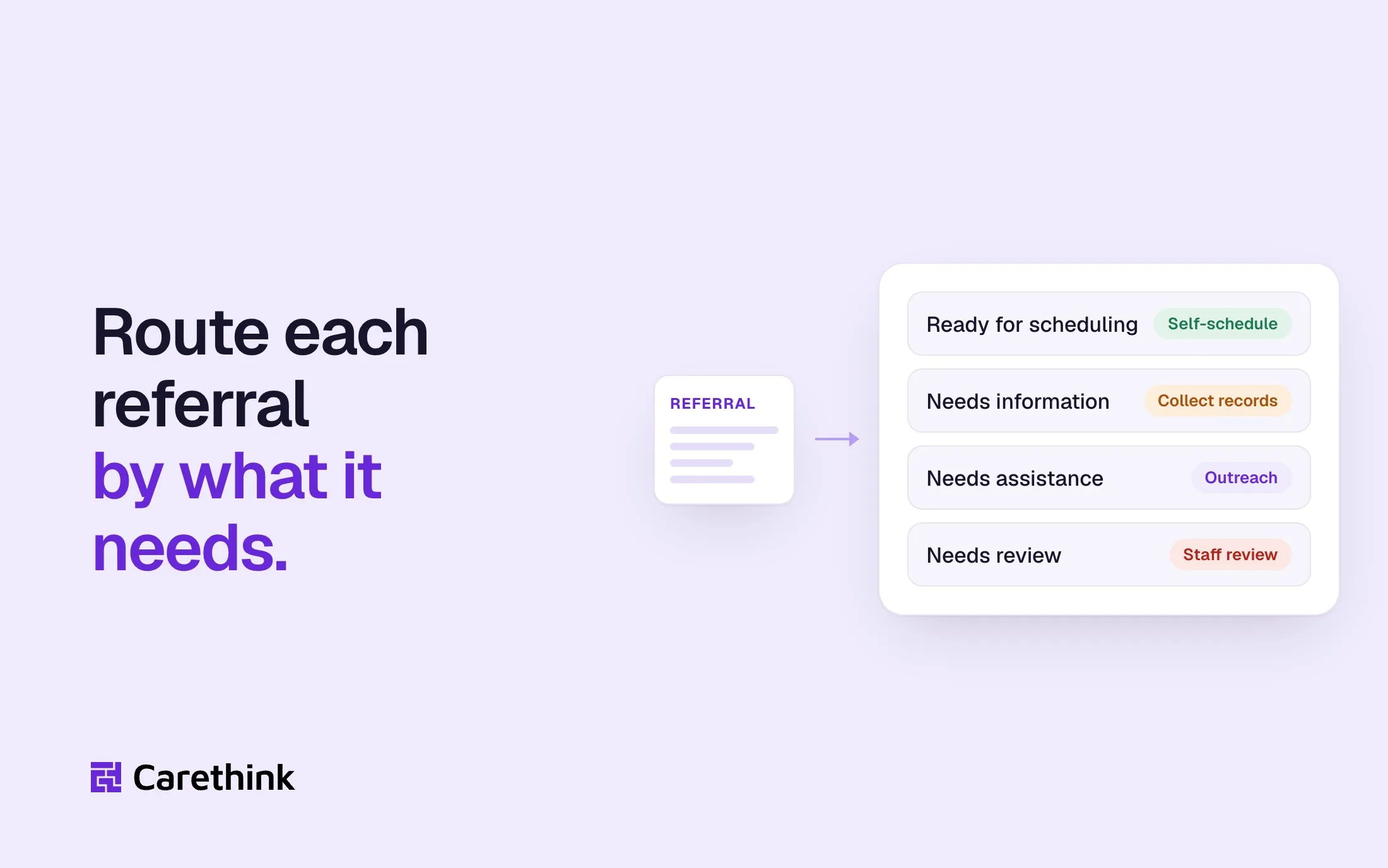
A system should help identify why the patient was referred, determine medical and operational urgency, select the appropriate provider and location, account for payer or authorization requirements, and establish the latest acceptable appointment date.
Carethink is designed around this workflow. It helps ophthalmology practices understand and prioritize incoming referrals, route them appropriately, and track whether the patient moves toward scheduling.
For a broader comparison of platforms, see Best Referral Management Software for Ophthalmology Practices.
The Real Impact: Patients, Partners, and Reputation
When referral workflows are managed consistently:
- Urgent patients can be identified sooner
- Referrals reach the appropriate provider or location faster
- Staff have clearer next steps
- Referring providers have greater confidence in the process
- Practice leaders have better visibility into referral performance
In ophthalmology, reputation is everything. How quickly and predictably you serve patients becomes a defining characteristic of your practice.
A reliable referral process gives ophthalmology practices a consistent way to identify, prioritize, route, and follow incoming patients without depending on spreadsheets, inboxes, and staff memory.
About the author

Joseph Pipia is a healthcare technology entrepreneur and product builder. He has built and scaled health tech products used by large hospitals and ambulatory centers, supporting care for millions of patients. He earned his MBA from MIT Sloan School of Management.
Joseph Pipia on LinkedIn