Overbooking Does Not Fix Referral Conversion
Overbooking can improve provider utilization, but it cannot fix referral conversion. Learn what healthcare leaders should measure and improve instead.
Article· 4 min read Joseph Pipia
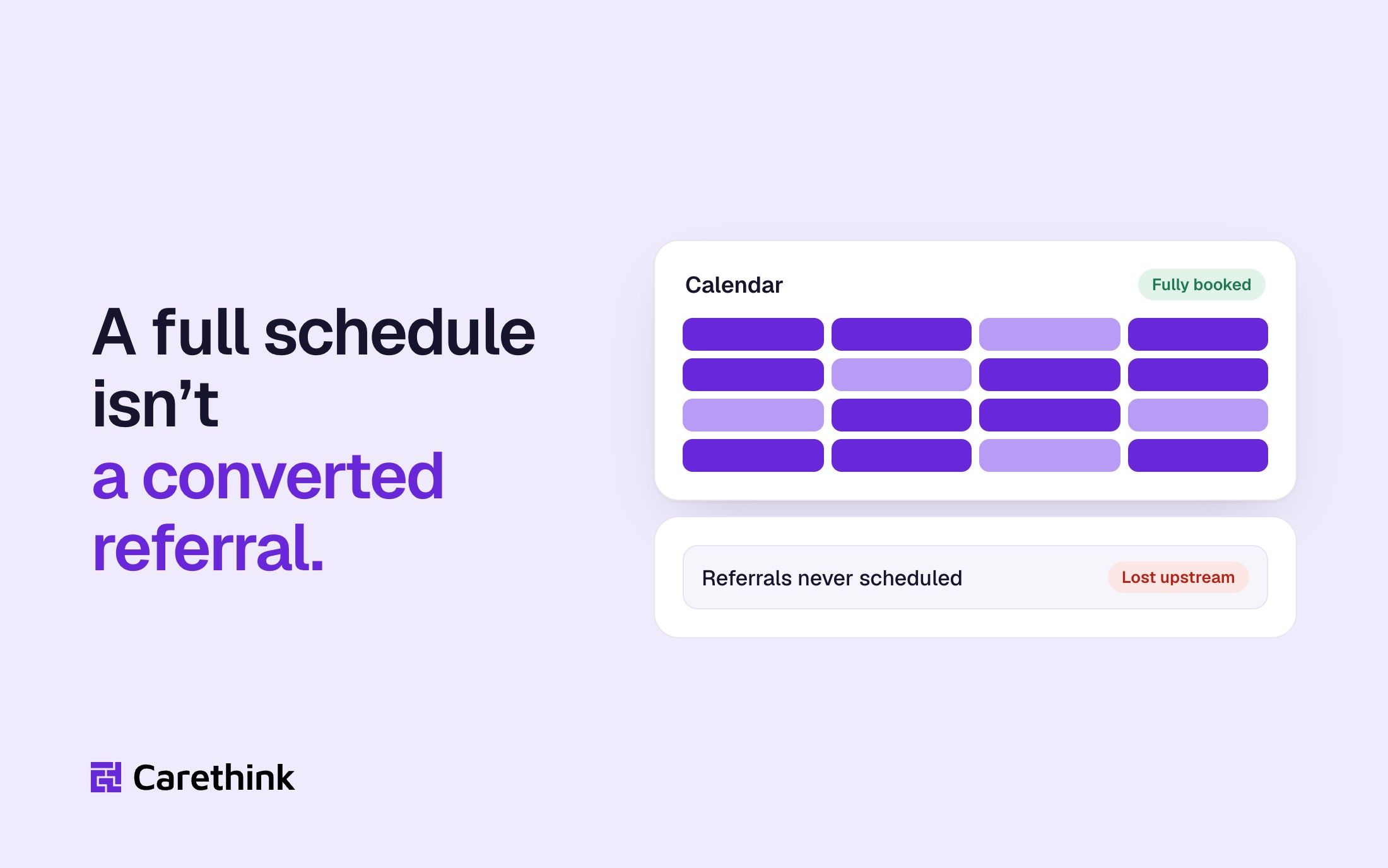
Many healthcare organizations overbook appointments to offset expected no-shows and keep provider schedules full. Used carefully, this can improve capacity utilization. However, a full schedule can create the impression that the referral process is working when referred patients are still being lost before they receive care.
Overbooking manages uncertainty within the appointment calendar. Referral conversion measures how effectively the organization moves a referral from receipt to a completed visit, evaluation, admission, or start of care. Improving one does not automatically improve the other.
What overbooking can accomplish
Overbooking typically uses historical attendance patterns to schedule more patients than the organization could accommodate if everyone arrived. The objective is to reduce unused clinical time caused by cancellations and no-shows.
Evidence suggests that well-designed overbooking can improve utilization. In one outpatient-clinic study covering settings such as physical therapy and primary care, a dynamic scheduling model increased utilization by approximately 6.7%. The study also identified a risk of appointment conflicts and noted that it did not assess patient satisfaction or the ethics of overbooking (PubMed).
That makes overbooking a legitimate scheduling tactic, but one with operational tradeoffs. If more patients arrive than expected, the organization may experience longer waits, rushed visits, staff overtime, and a less predictable patient experience.
More importantly, overbooking begins after a patient has reached the scheduling process. It does little for referrals that were never identified, reviewed, accepted, or scheduled.
Where referral conversion breaks down
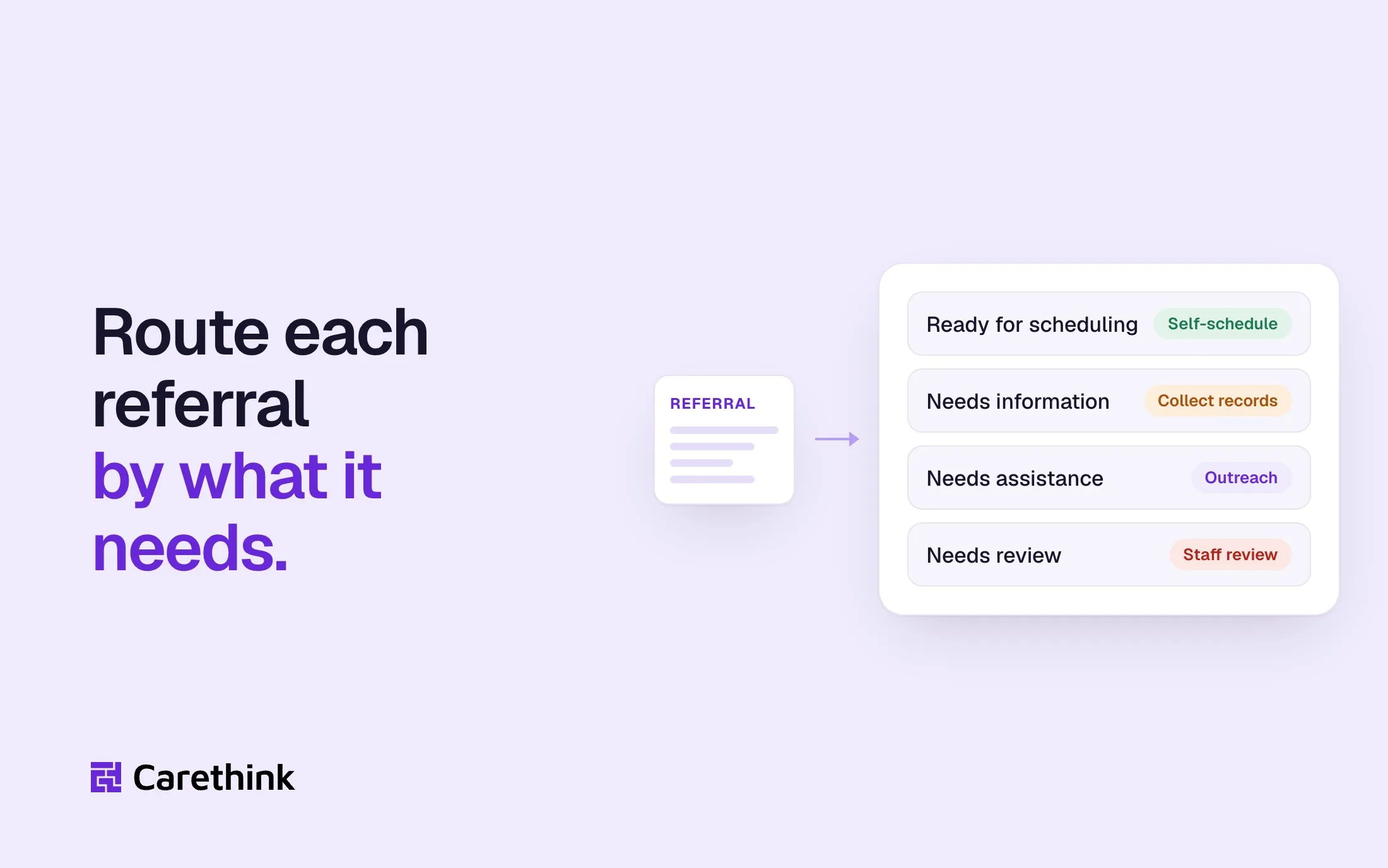
A referral must pass through several operational steps before it becomes completed care. Staff may need to identify its purpose, assess urgency, verify coverage, determine the appropriate provider or service, contact the patient, collect records, obtain authorization, and coordinate an appropriate appointment.
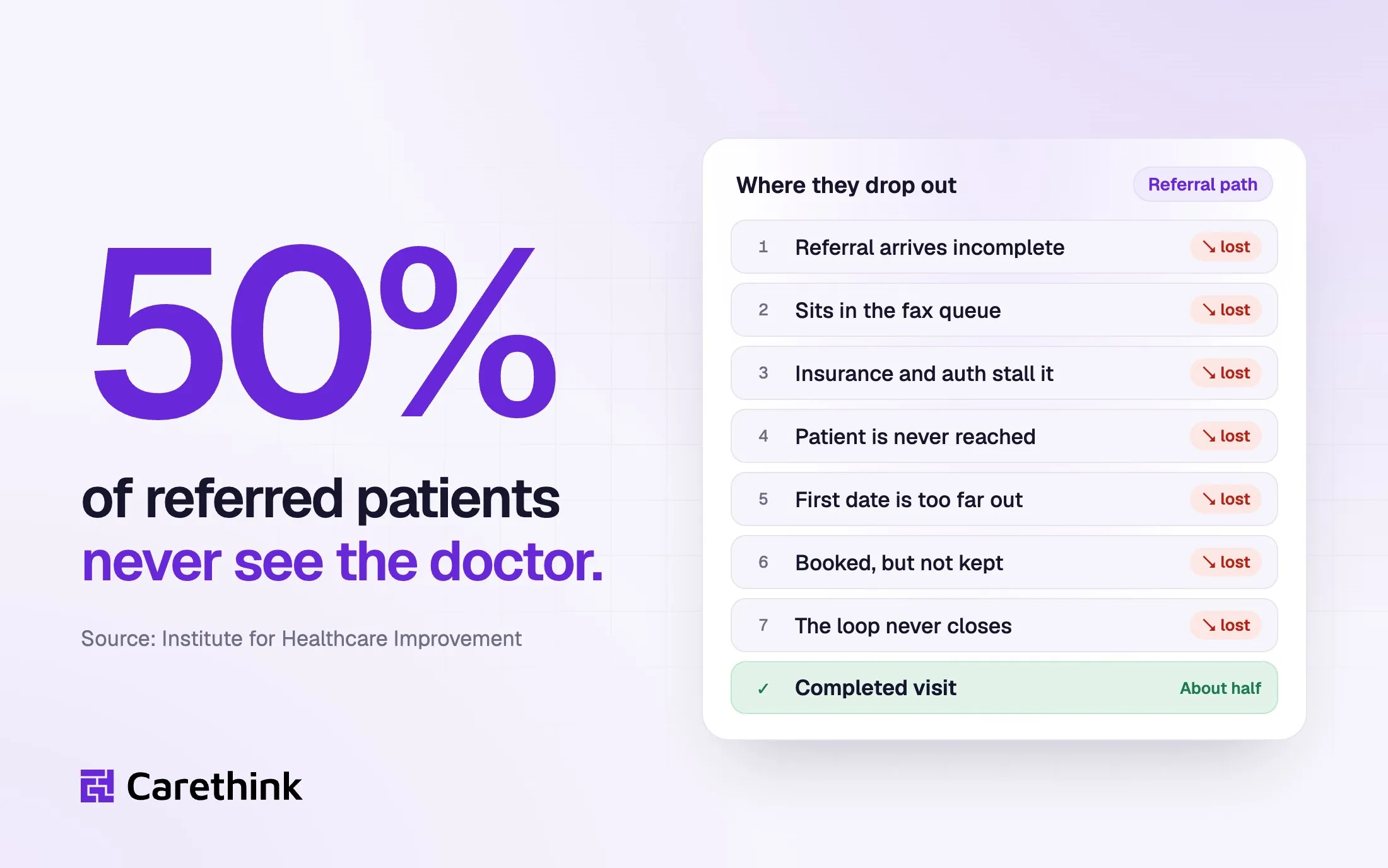
Failures can occur at every stage. The referral may sit unreviewed in a fax inbox. The patient may not be reached. Required information may be missing. Staff may not know who owns the next action. An appointment may be offered too late, or the referral source may never receive an update.
Research summarized by the Agency for Healthcare Research and Quality illustrates how varied these failures can be. In a study of diagnostic colonoscopy follow-up, 22.3% of patients did not receive timely follow-up. Among the process failures identified, 26% involved procedures that were never scheduled, while 18% involved procedures that were scheduled but cancelled or missed (AHRQ).
Adding appointments to a provider’s calendar does not resolve these upstream problems. The schedule may remain busy because it contains established patients, follow-ups, or deliberately overbooked visits, while new referrals continue to disappear from the pipeline.
Why referral conversion deserves separate attention
Referral conversion affects more than immediate visit volume. It determines how effectively an organization turns existing demand into delivered care.
For healthcare organizations, a lost referral can mean a missed evaluation and the loss of subsequent visits or procedures. Delays in intake, eligibility review, or start-of-care coordination may cause the referral to move to another provider organization.
Referral performance also influences future demand. The American Medical Association emphasizes that timely access, proactive patient contact, communication, and status updates are important to referral relationships. Referring providers want confidence that their patients were contacted, seen, and appropriately handed back for ongoing care (AMA).
When that visibility is missing, referral sources may gradually direct patients elsewhere, even if the receiving organization’s providers appear fully utilized.
Where referral management software fits
Referral management software should make each referral visible from receipt through outcome. For specialty practices, that means identifying why the patient was referred, determining urgency and the appropriate provider, establishing when the patient should be seen, coordinating follow-up, and tracking whether the referral was scheduled, completed, or lost.
See our comparison of referral management software for specialty practices.
Measure utilization and conversion independently
Operational leaders should monitor two distinct sets of metrics.
Schedule performance includes provider utilization, cancellation and no-show rates, appointment conflicts, patient wait times, and staff overtime.
Referral performance should include:
- Referrals received and acknowledged
- Time to review and first patient contact
- Percentage successfully contacted
- Referral-to-scheduled conversion
- Referral-to-completed-visit or start-of-care conversion
- Time from referral receipt to completed care
- Referrals lost, with standardized reasons
- Status updates sent to referral sources
These measures show whether demand is moving through the organization or accumulating in work queues, inboxes, and spreadsheets.
Overbooking may help fill capacity that already exists. Sustainable growth requires a reliable process for receiving, advancing, and closing every appropriate referral.
FAQs
What is referral conversion in healthcare?
Referral conversion is the percentage of received referrals that reach a defined outcome, such as a scheduled appointment, completed visit, admission, or start of care.
Can overbooking increase completed visits?
It can reduce unused capacity caused by expected no-shows, potentially increasing total completed visits. However, it does not address referrals lost before scheduling or remove intake, authorization, documentation, and communication barriers.
What is the most important referral conversion metric?
The completed-care conversion rate is usually the clearest outcome measure. Organizations should also track intermediate stages, including review, patient contact, scheduling, and the reasons referrals are lost.
Sources used
About the author

Joseph Pipia is a healthcare technology entrepreneur and product builder. He has built and scaled health tech products used by large hospitals and ambulatory centers, supporting care for millions of patients. He earned his MBA from MIT Sloan School of Management.
Joseph Pipia on LinkedIn